Quick answer: start with the date of the feast. Traditional holiday foods around the world follow their calendars, so pick the holiday first, then a dish type, then decide how many people will share the table.
If you already know the holiday, A Taste Of German Christmas: Essential Traditional Foods And Where They Come From – Asmallbite follows one country’s Christmas table, and The King Cake: A Sweet History From Pagan Roots To Mardi Gras Staple (2026 Guide) – Asmallbite follows one sweet through its season. The sections below sort the wider field so you can choose where to begin.
Criteria for choosing where to start
A holiday menu is easier to plan when you decide what is fixed and what is flexible. Dates are fixed, rituals are usually fixed, and ingredients bend to what a household can source. Four criteria sort most of the choices in this guide.
- The date. If you are cooking for a specific day, choose a tradition that belongs to that day. The Ethiopian Orthodox Church, for example, observes Christmas on a different date from many other churches, so a menu built around it belongs in a different week of the year.
- The dish type. Wrapped parcels, breads, fish dishes and sweets each demand different equipment and timing. A steamer suits tamales, a simmering pot suits a Polish beetroot soup, and an oven suits most breads.
- The table. A communal bowl, a buffet and a plated meal ask different things of the cook. Decide whether guests will serve themselves, share from one dish or be served.
- The effort you can give. Some traditions are a long project spread over a day or a season, while others are one dish with a small ritual attached. Match the tradition to your available time rather than to the most famous version.
The rest of this guide takes those criteria in turn. It begins with dates, because the calendar is the first filter, and then moves to the foods themselves.
Holiday calendars and what lands on the table
Holiday food traditions differ by country first in timing and only second in ingredients. The same Christmas can mean a fast that ends in a feast, a long Christmas Eve table, or a single dessert with a game hidden inside it.
Ethiopian Orthodox Christmas
According to NPR’s series on Christmas foods around the globe, the Ethiopian Orthodox Church observes Christmas on Jan. 7. Before that day comes a 40-day vegan fast, with no dairy and no meat until the traditional dish of doro wat arrives on Christmas Day.
That structure changes how you plan. The feast is the reward at the end of a long stretch of restraint, so the menu should centre on the one dish that marks the break. If you want the wider eating customs around it, the guide to ethiopian food traditions covers injera and shared plates.
Polish Christmas Eve
The BBC Bitesize overview of festive foods describes a Polish Christmas Eve meal of 12 dishes symbolising the 12 months of the year. This tradition suits a host who likes a long, paced meal, since the count is part of the meaning. It is a poor fit if you want one centrepiece and little else.
Denmark on 24 December
The same BBC page describes Danish risalamande served on 24 December, with a single whole almond hidden in one serving. The dessert works as a game as much as a dish, so serve it where everyone can take part.
New Year at midnight
A holiday food traditions roundup from Kansas Farm Food Connection describes eating 12 grapes at midnight, each representing a month of the year. It is the lightest tradition in this guide, with no cooking at all, so it suits a host who wants one symbolic ritual on top of an ordinary menu.
Dumplings and wrapped parcels
Dumplings and other wrapped parcels turn up on holiday tables because a filling sealed in dough or leaf is easy to make in quantity and easy to serve. The wrapper, the filling and the cooking method are the three attributes that separate one tradition from another.
Tamales and hallacas
Mexican Christmas Eve tamales are made from masa wrapped in corn husks or banana leaves and steamed until tender, according to a holiday food traditions article from a regional food business. Venezuelan hallacas, described by BBC Bitesize, are corn dough stuffed with a pork, beef or chicken stew and wrapped in banana leaf. The BBC page dates the dish to the 15th and 16th century colonial times.
Both dishes pair a corn-based dough with a savoury filling and a leaf or husk wrapper. The practical difference is the cooking method: tamales are steamed, so plan steamer space and a long, hands-on assembly session. For the dough itself, the guide to the history of the tortilla explains nixtamalization, the treatment behind masa.
Uszka in barszcz wigilijny
The BBC describes the Polish Christmas Eve barszcz wigilijny as beetroot simmered in vegetable stock with vinegar and garlic, served with mushroom uszka dumplings. This one suits cooks who prefer a simmering pot to a steamer. It also suits households keeping a meat-free Christmas Eve, since the stock is vegetable-based and the dumplings are filled with mushroom.
Dumplings beyond the holidays
If dumplings are your main interest, the story of the history of dim sum covers the tea-house tradition, and the history of pasta deals with dough shapes that overlap with dumpling-making. These are everyday rather than holiday foods, but the techniques carry over.
Bread traditions and shared plates
Bread traditions matter at holiday tables because bread is both food and utensil. It is the part of the meal that is most often shared by hand.
The clearest example in the supporting material is Ethiopian. BBC Bitesize notes that the meal is often eaten from one communal bowl, with injera flatbread as the base. Swedish julbord is a different model. A holiday food roundup lists baked ham, meatballs, pickled herring, salmon, cheeses and breads on the same buffet. Here bread is one item among many instead of the eating surface.
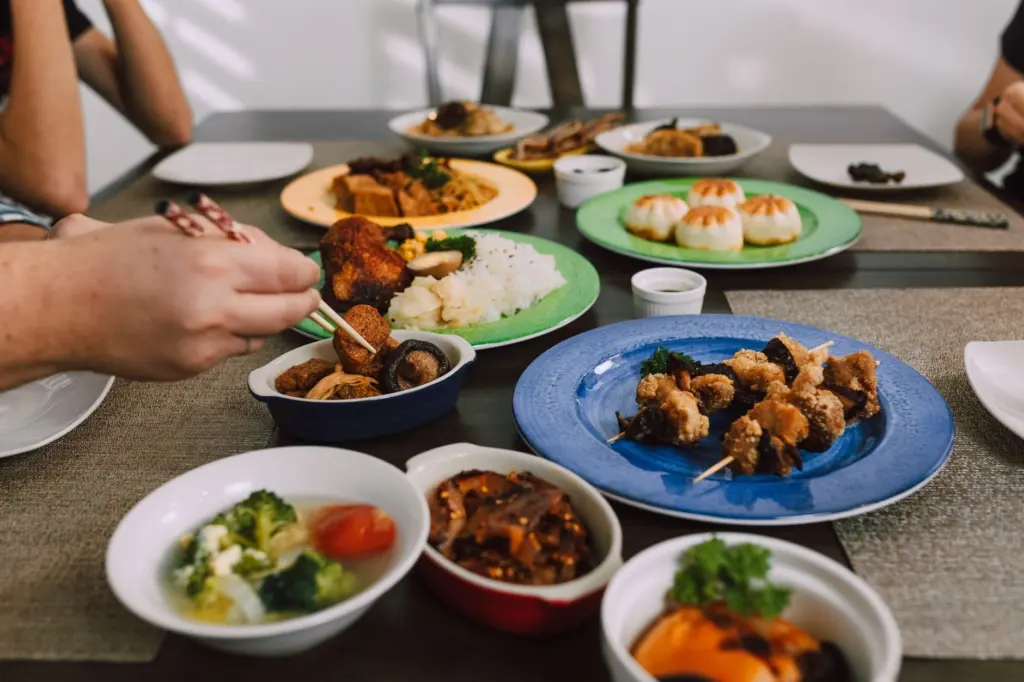
That contrast drives a decision. Choose the communal-bowl model if you want a table that is informal and close. Choose the buffet model if you are feeding a large group with mixed tastes, because each guest can build a plate and bread simply fills the gaps.
Where to read more on breads
- Fermented dough. For a loaf built on a starter, see the history of sourdough bread.
- Shaped and glazed breads. The history of pretzels and the history of croissants both trace a shape to a story.
- Seasonal buns. The history of hot cross buns ties a bread to Good Friday folklore.
- Flatbread and pizza. The history of pizza and pizza margherita history follow a flatbread that became a global dish.
Family meals: communal bowls, buffets and games
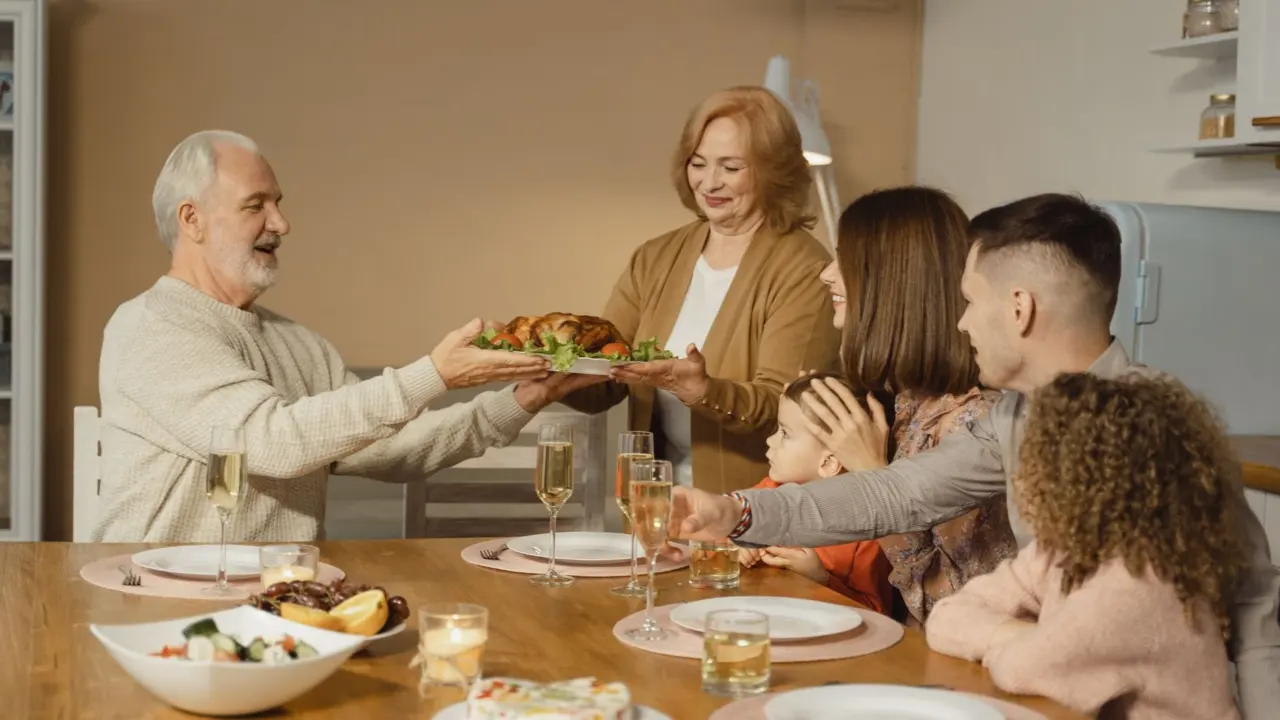
Family meals are where holiday food traditions become social rules. A custom about how food is served often matters more than the recipe, and that is why the same dish can feel different at two tables.
Three models appear across the traditions above. The communal bowl asks everyone to eat from the same dish. The buffet, as in the julbord, leaves selection to each guest. The counted meal, as in the Polish Christmas Eve table, makes the number of dishes part of the symbolism. A fourth model is the game, as with the hidden almond in risalamande.
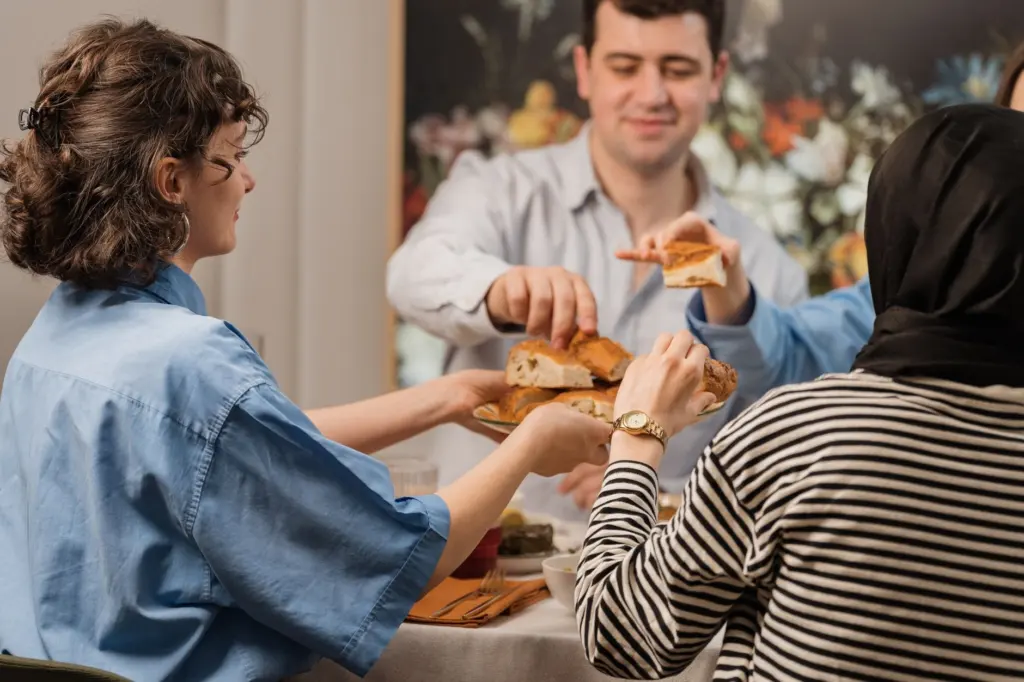
For the buffet style, what is a smorgasbord explains the Swedish approach to a spread, and what is a thali covers a plated meal built from many small servings. Both help a host decide how to lay out a table that has many dishes.
The judgement call is about guests. A hidden-almond dessert or a counted menu suits a table with children or a talkative family, because it gives people something to do. A communal bowl suits a smaller, closer group. A buffet suits a mixed crowd where dietary needs differ.
Fish, feasts and festive spreads
Fish holds a fixed place in several holiday traditions, often because the day is meatless or the region has a coastal history. The supporting material is clearest on Portugal and Sweden.
BBC Bitesize says the Portuguese dish lampreia de ovos dates back to the 15th century. The Swedish julbord, per the holiday food roundup, includes pickled herring and salmon alongside ham and meatballs. Fish therefore appears both as a centrepiece and as one item on a larger table.
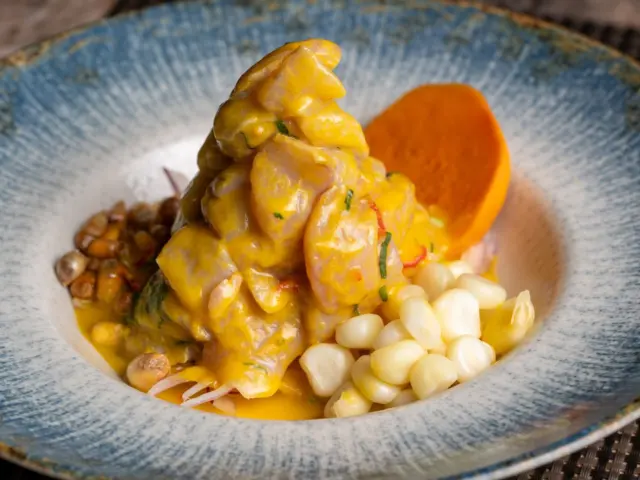
If you want to build a fish-led holiday menu, two guides help. Feast of the seven fishes meaning explains a seafood-centred Christmas Eve, and Bacalhau And Beyond: The Complete Guide To Portugal’s National Dish In 2026 – Asmallbite covers the salt cod at the centre of Portuguese cooking. For raw and cured fish, history of sushi traces fish from fermentation to street food, and Ceviche: Peru’s National Dish — The Complete Guide To Its Taste, History, And Where To Try It In 2026 – Asmallbite covers the Peruvian approach.
Choose a fish-led menu when you want something lighter than a roast, or when the day itself is meat-free. Choose a mixed buffet when guests will not all eat fish.
Sweet dishes and hidden-almond games
Sweet dishes often carry the most ritual. They arrive last, so they are the course people remember, and many include a surprise or a symbol.
Danish risalamande is the clearest case. The BBC describes a single whole almond buried in one serving. South African malva pudding is a different kind of sweet: the BBC says it dates back to the 17th century, when Dutch colonisers settled in Cape Town. That gives a dish with a named region and period, which makes it easier to present with its story.
For a sweet with a seasonal surprise built in, return to The King Cake: A Sweet History From Pagan Roots To Mardi Gras Staple (2026 Guide) – Asmallbite. For layered pastry and syrup, see who invented baklava. For a modern Italian dessert and the dispute over its birth, see the history of tiramisu.
Other sweet and drink histories connect to holiday tables too. The history of chocolate follows the move from drink to bar. The who invented ice cream guide sorts myth from fact in frozen desserts. The history of apple pie asks how a pie became a national symbol. The history of coffee and The History Of Tea: From Ancient Legends To Global Rituals — A Concise 2026 Overview – Asmallbite cover the drinks that end many festive meals.
Regional cuisine and national dishes
Regional cuisine shapes holiday food because a celebration usually uses the staple ingredients of the place. A national dish is often the same food in a more public role, and some countries do not name a single one.
The Americas offer the widest set of guides. For Mexico, Is There A National Dish Of Mexico? Mole, Tacos, And The Foods That Define A Nation (2026 Guide) – Asmallbite asks whether one dish can stand for a country. For the Spanish-speaking Caribbean and Central and South America, the guides cover Arroz Con Gandules: Puerto Rico’s Beloved National Dish (History, Recipe, And Where To Try It) – Asmallbite, What Is Colombia’s National Dish? The Story, Recipe, and Cultural Meaning of Bandeja Paisa (2026 Guide) – Asmallbite, Baleadas: Honduras’s Beloved National Dish — History, Recipe, and Traditions (2026 Guide) – Asmallbite, Pupusas & Beyond: El Salvador’s National Dish — History, Recipe, And Where To Try It (2026 Guide) – Asmallbite and Asado: The Heartbeat Of Argentina — The Complete 2026 Guide To The Nation’s Beloved Dish – Asmallbite.
Elsewhere, Is Paella Spain’s National Dish? The Complete Guide To Spain’s Culinary Symbol (2026) – Asmallbite tests a famous claim, and What Is Canada’s National Dish? Poutine, Pride, And Regional Flavors In 2026 – Asmallbite shows how regional flavours complicate a single answer.
Use these guides when you cook for a guest from the country in question, or when you want to serve a dish with a story. A national dish is rarely a holiday dish by definition, but it often shows up when the holiday brings family together.
Hot pots, stews and spiced dishes
- Stews and broths. Where does goulash come from follows a shepherds’ dish into comfort food, and where did pho originate follows a Vietnamese noodle soup.
- Noodles. The history of ramen traces Chinese noodles to a Japanese icon.
- Spiced dishes. Where does curry come from explains a family of dishes rather than one recipe.
- Eastern Mediterranean and North African plates. Shakshuka origin, where did hummus originate and where did falafel originate each deal with a dish that more than one country claims.
- Fermented side dishes. The history of kimchi covers a staple tied to communal making.
Where classic dishes come from
Classic dishes come from a mix of regions, migrations and records, and the evidence for each is uneven. Some dishes can be placed in a period and a place. Others have a claimed origin that is only a story.
The supporting material gives a few dated anchors. Venezuelan hallacas date to the 15th and 16th century colonial times, according to BBC Bitesize. Portuguese lampreia de ovos dates to the 15th century. South African malva pudding dates to the 17th century and the Dutch settlers of Cape Town. Japan’s KFC Christmas party barrel is much more recent: it started in 1970 and went national in 1974.
The lesson is to treat the date and the region as separate facts. A dish can have a firm region and a vague date, or the reverse. When you present a dish to guests, say what is documented and avoid repeating a legend as fact.
The American table has its own set of origin questions. Who invented the hamburger, who invented nachos, origin of caesar salad and history of eggs benedict each weigh competing claims. Who invented fortune cookies addresses a food often assumed to be Chinese.
For cooking that grew out of a mixed heritage, history of soul food, origin of jambalaya and history of gumbo each follow several cultures into one pot.
Thanksgiving and the harvest table
Thanksgiving is the holiday on this site with the most developed history, and it is a useful case of a meal that turned into a fixed menu. The History Of Thanksgiving: From Harvest Feasts To A National Holiday (A Concise 2026 Overview) – Asmallbite follows the move from harvest feasts to a national holiday. If your question is about the main dish, the dish-by-dish guide to why do we eat turkey on thanksgiving goes through the menu item by item.
Read these before planning a Thanksgiving menu if you want to explain the dishes to guests. They are less useful if you only need a recipe.
How home cooking habits have changed
Home cooking habits have changed less in the ritual than in the labour. The supporting material shows two ends of that range.
At one end is the tamale. The holiday food roundup describes masa wrapped in corn husks or banana leaves and steamed until tender, which means assembly and steaming are still the method. A household that keeps the tradition keeps the work. A sensible compromise is to scale the batch to the helpers available, since the wrapping is the slowest step.
At the other end is Japan. BBC Bitesize says only around 1% of people in Japan celebrate Christmas, yet the KFC Christmas party barrel started in 1970 and became national in 1974. The result is a Christmas meal that is bought and shared, not cooked from a family recipe. It shows that a food tradition can be built quickly, and that the meal can matter more than the method.
Between those ends sits a practical choice for modern hosts. Decide which part you want to keep: the dish, the date or the gathering. Keep the dish and you keep the work. Keep the date and you can simplify the menu. Keep the gathering and you can buy part of the meal, as the Japanese example shows. None of these is more authentic by default, and the right one depends on time and guests.
The guides on cooking and serving rest on the same logic. Where an origin story is documented, tell it at the table. Where it is contested, serve the dish and let guests argue, as with the shared claims on hummus and falafel above.
Side-by-side overview
Use this table to compare the holiday traditions with the clearest dates and structures in this guide.
| Tradition | Timing | Defining feature | Planning use |
|---|---|---|---|
| Ethiopian Orthodox Christmas | Jan. 7, after a 40-day vegan fast | Doro wat ends the fast; meal often eaten from one communal bowl | Build the menu around one centrepiece and a shared serving style |
| Polish Christmas Eve | Christmas Eve | 12 dishes for the 12 months; beetroot soup with mushroom uszka | Plan many small dishes and a long, paced meal |
| Danish risalamande | 24 December | One whole almond hidden in a single serving | Serve at the table so everyone can join the game |
| Japanese KFC party barrel | Started 1970; national in 1974 | A bought meal as a Christmas custom, in a country where around 1% celebrate Christmas | Shows when a purchased meal can carry a tradition |
Figures come from BBC Bitesize and NPR’s Christmas foods series.
Frequently asked questions
How long is the fast before Ethiopian doro wat?
NPR describes a 40-day vegan fast, with no dairy or meat, ending on Christmas Day with doro wat.
What is hidden in a Danish risalamande?
One serving holds a single whole almond. The dessert is served on 24 December, and finding the almond is part of the custom.
What do 12 grapes at midnight represent?
Each grape stands for a month of the year, and they are eaten at midnight to mark the New Year.
Is Christmas widely celebrated in Japan?
No. Around 1% of people in Japan celebrate Christmas, according to BBC Bitesize, though the KFC party barrel became a national custom in 1974.