Someone serving tea at a British table might assume it began there. The history of tea says otherwise: it began in China, spread to Japan, and reached Europe through trade routes.
Tea sits among the foods and drinks whose stories travel with people, much like the customs gathered in traditional holiday foods around the world. The sections below separate common assumptions from what the record supports, then tie each period to how tea is prepared and served.
Origins in China
Tea originated in China. It is made from the leaves and buds of Camellia sinensis, a flowering evergreen shrub thought to be indigenous to China. That plant origin matters more than any legend, because everything later in the story, from trade cargoes to ceremony, grows from a crop first handled there.
Chinese writing also marks tea as a subject of study. The first recorded book on tea, the Ch’a Ching, was written in the late 8th century by Lu Yu. A drink that earns a dedicated book had already moved beyond a local curiosity by then.
Four assumptions worth correcting
Most confusion about tea’s past comes from reading the British teapot back into history. The table sets the common assumptions against the record.
| Common assumption | What the record shows | Why it matters for the cup |
|---|---|---|
| Tea began in Britain | The plant is thought indigenous to China; Britain’s first written record of tea is a shopping list written in 1644 by a man in Leeds | Treat British tea customs as a late chapter, not the source of the drink |
| Tea was always loose leaves | In Tang-era China, tea was steamed and packed into brick-like cakes for transport and trade | Forms of tea have changed with the needs of carrying and selling it |
| Tea was always an everyday drink | Early in Britain it was so expensive that only the royal family and wealthy aristocrats could afford it; cheaper Assam, Darjeeling and Ceylon black teas arrived in the 19th century | Affordability, not tradition alone, explains why tea became a daily habit |
| Europe got tea by one route | Tea began reaching Europe through Dutch and Portuguese trade routes from the 17th century | Trade competition shaped who sold tea and where |
The dates and conditions in the table come from a tea history overview and the National Trust’s history of tea.
Preparation: from pressed cakes to whisked matcha
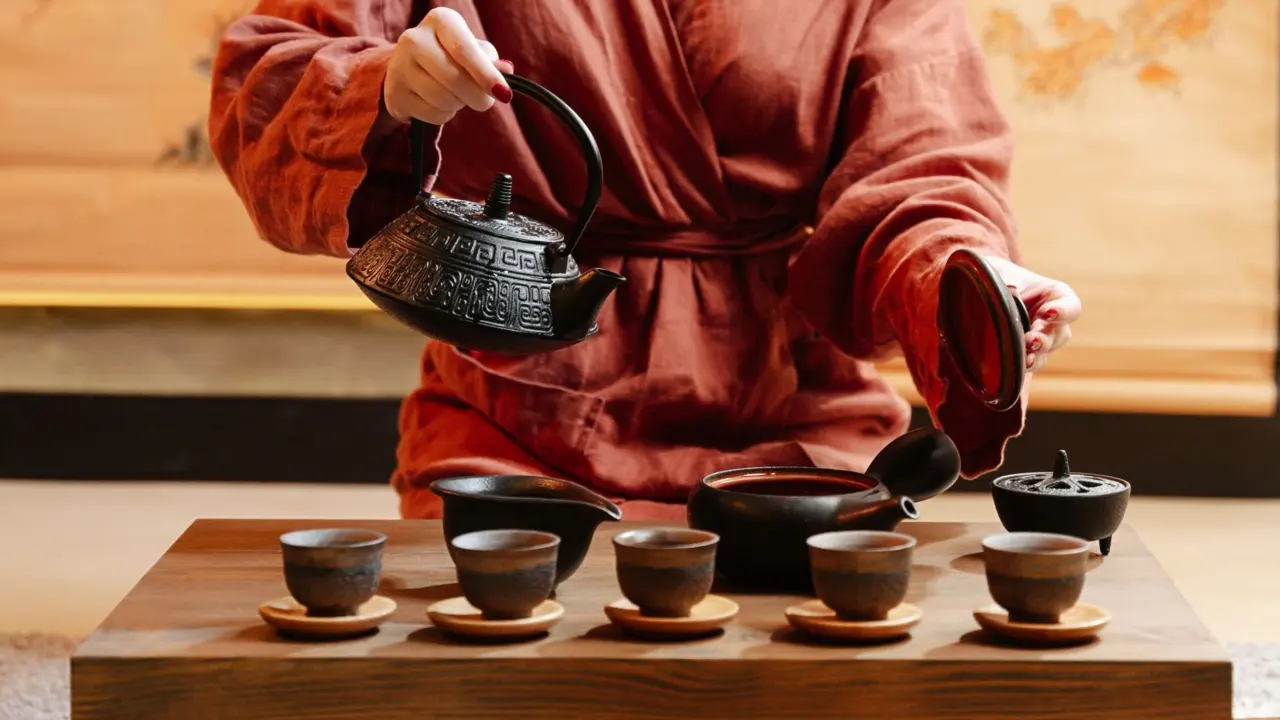
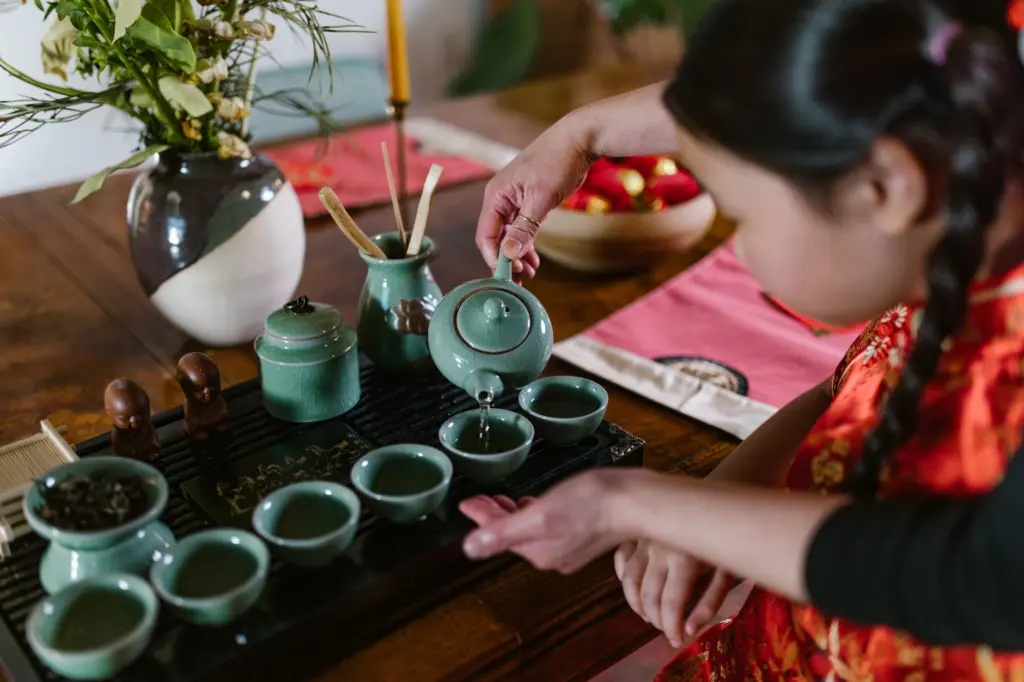
Tea preparation has changed with each era, and the pressed cakes of Tang China were only the first recorded form. The next step in China was whisking: Dian Cha, a Song-era preparation from the Song dynasty (960-1279), is considered the origin of modern matcha. Anyone whisking matcha today is using a method with Song-era roots.
Japan: seeds, ceremony and a pause
Japan received tea from China through a person rather than a cargo. Around the turn of the 13th century, a Japanese priest, Myoan Eisai, returned home with tea seeds which he soon planted in Japanese soil. Japan’s ceremonial tradition did not run smoothly afterwards: the same source notes that the Japanese government banned tea ceremonies in the 14th century, and they later resumed.
Three points follow for anyone who drinks or serves tea in these styles:
- Matcha has a long lineage. The whisked method connects back to Dian Cha, so matcha is better treated as a revived Chinese method than a recent trend.
- The ceremony was not unbroken. Because the ban was lifted and ceremonies resumed, today’s practice reflects a revival as much as an inheritance.
- Cultivation moved with people. Seeds carried by a priest planted tea in Japan, which shows that spread could happen through a single traveller, not only through merchants.
If you want to taste the oldest preparation tradition in this story, whisked matcha is the cup to choose, since it is the style tied most directly to the Song-era method.
Trade routes to Europe and key dates
Tea reached Europe through Dutch and Portuguese trade routes from the 17th century, and Britain’s court and port records then give the clearest dates. The timeline below follows the trade record.
- 1606: After a trading post was set up in Java, the Dutch shipped a consignment of tea from China to Holland.
- 1644: A shopping list written in Leeds becomes the first written record of tea in Britain.
- 1662: The marriage of Charles II to Catherine of Braganza brought tea into British court culture.
- 1664: The East India Company was shipping tea leaves to London in bulk, at 100 pounds per shipment, according to the same history overview.
The sequence shows a pattern: first a one-off Dutch cargo, then a written trace in a private household, then royal fashion, then regular company shipping. Tea became an English habit by moving up from rare imports to organised supply, not by appearing overnight.
From luxury to global commodity
Tea became a global commodity when large trading companies and falling prices turned a court luxury into a product for many buyers. The National Trust describes the East India Company as probably the most powerful corporation in history, dominating trade between Europe, South Asia and the Far East. That reach explains how tea moved along routes that connected producers and drinkers who never met.
Price was the barrier at the start. In mid-17th-century Britain tea was so expensive that only the royal family and wealthy aristocrats could afford it. Two changes widened the market. In the 19th century, cheaper Assam, Darjeeling and Ceylon black teas arrived, and the National Trust links them to wider consumption. Earlier, Britain cut the tax rate on tea down to 12 percent in 1784, which reduced smuggling.
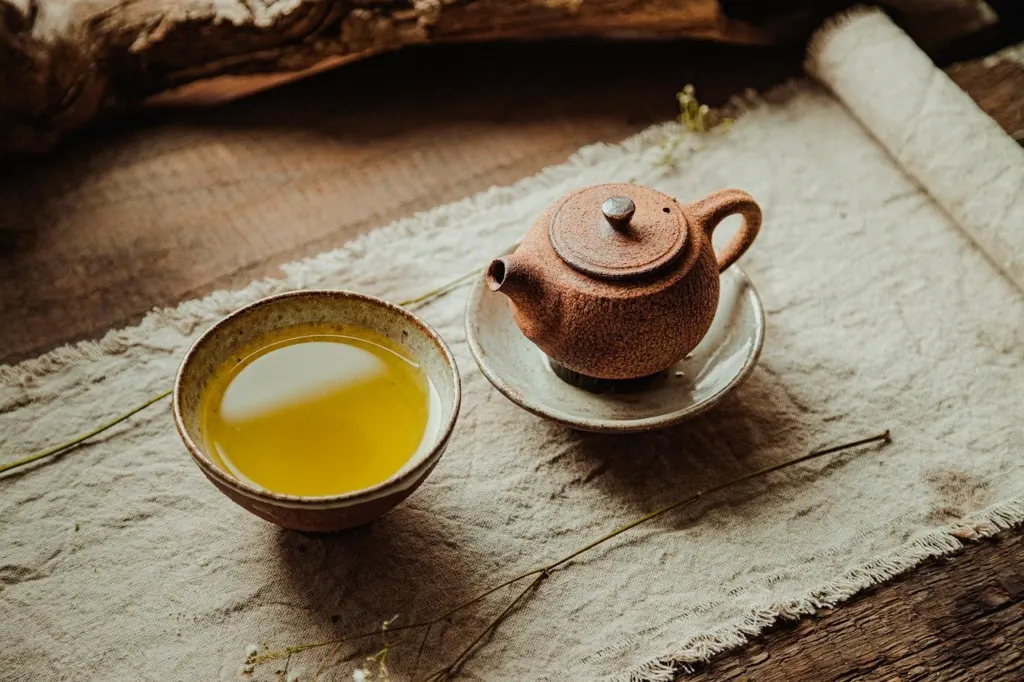
Dried leaf is the form that made this trade workable, just as Tang-era cakes had made transport and trade possible for earlier merchants. For a buyer today, that history is a reminder that the dry leaf in the caddy is the traded product, and the brewed cup is what the whole supply chain exists to deliver.
Tea beside other food stories
Tea’s path from a Chinese shrub to a world commodity is one example of how a single food can carry trade, politics and identity. For comparison, a national dish tells that kind of story through one plate: see Pupusas & Beyond: El Salvador’s National Dish — History, Recipe, And Where To Try It (2026 Guide) – Asmallbite and Ceviche: Peru’s National Dish — The Complete Guide To Its Taste, History, And Where To Try It In 2026 – Asmallbite.
Frequently asked questions
| Question | Answer |
|---|---|
| Which plant does tea come from? | Tea comes from the leaves and buds of Camellia sinensis, a shrub thought to be indigenous to China. |
| Who brought tea seeds to Japan? | A Japanese priest, Myoan Eisai, returned from China with tea seeds and planted them in Japan around the turn of the 13th century. |
| What links Song-era tea to matcha? | Dian Cha, a whisked preparation from the Song dynasty (960-1279), is considered the origin of modern matcha. |
| How did tea first reach Europe? | It began arriving through Dutch and Portuguese trade routes from the 17th century. |
| Why did tea become affordable in Britain? | Cheaper Assam, Darjeeling and Ceylon black teas arrived in the 19th century, and an earlier tax cut to 12 percent in 1784 reduced smuggling. |