The national dish of El Salvador is the pupusa, a thick fried tortilla of masa stuffed with cheese, meat or refried beans and served with curtido. Its standing comes from deep Indigenous roots and everyday popularity across the country.
Pupusas belong to a wider pattern of foods that carry history and ritual, which you can explore in traditional holiday foods around the world. This guide follows the dish from its origins to the griddle and the table, then points you to where to eat it.
How pupusas became the national dish
Pupusas earned the title through a long chain: Indigenous origin, adaptation under colonial rule, migration abroad and constant everyday eating. Read in order, the stages explain why the dish feels national rather than regional.
- Pipil origins. The Pipil were the predominant tribe in the area before the Spanish conquest, and they named their territory Cuscatlán, meaning Land of the Jewel, according to Chef’s Pencil. Pupusas are described as first prepared by the Pipil tribes, and Solid Ground reports a belief that the dish goes back over 2,000 years.
- Vegetarian beginnings. Before colonization, pupusas were vegetarian, filled with squash blossoms, herbs and mushrooms, as Solid Ground explains.
- Meat enters the filling. The same source says meat became common in the filling from the 1570s, which is the point where the pork-filled pupusa familiar today begins to make sense historically.
- Emigration carries the dish abroad. During the 1980s civil war many Salvadorans fled the country, and they brought pupusas all over the globe. The dish became a portable marker of identity for people living far from home.
- Everyday dominance. Chef’s Pencil calls pupusas by far the most popular food in El Salvador.
The best way to read “national dish” here is as a statement about heritage and popularity. Pupusas link a pre-colonial food to the modern table, and that continuity, together with their reach across the country, is what the label rests on. With the history in place, the next question is how the dish is actually built.
Making pupusas: dough, filling and griddle
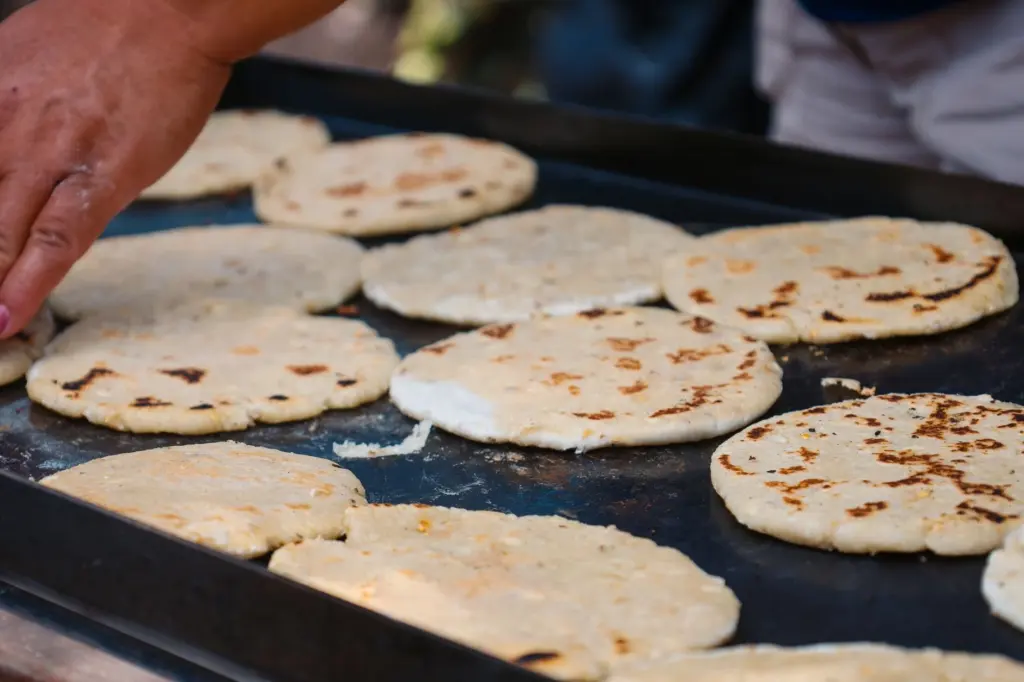
A pupusa is a thick fried tortilla stuffed with a hearty filling, as National Foods puts it. The masa is hydrated, wrapped around the filling, flattened and cooked in a pan. One home recipe from Solid Ground gives a workable baseline.
- Mix the dough. Combine 4 cups masa harina, 2 tsp salt and 3 cups cold water until you have a smooth, pliable dough.
- Form rounds and fill. Shape the dough into rounds, then fill each with 1 tsp beans, 1 tsp mozzarella cheese and 1 tsp squash. Treat those amounts as one recipe’s starting point rather than a fixed standard.
- Close and flatten. Fold the dough over the filling, seal it and pat it back into a flat round.
- Cook in a pan. Cook over medium heat for 2-4 minutes per side, until the bottoms are golden brown.
This version leans on masa harina, the dried flour sold for home cooks, which makes the dish achievable in a home kitchen without fresh-ground corn dough. Pre-mixing the dough and having the filling ready before you start shaping keeps the process moving once the pan is hot.
Traditional pupusa fillings
Cheese, pork, fried beans and loroco are the most popular pupusa fillings, according to Chef’s Pencil. The table below turns that list into ordering decisions.
| Filling | What to know | Planning use |
|---|---|---|
| Cheese | Named among the most popular fillings and one of the three classic stuffings | A sensible first order if you are new to the dish |
| Pork | Listed among the most popular fillings, alongside cheese, fried beans and loroco | Choose it when you want a savoury, meat-based pupusa |
| Pork rinds | Named as a filling alongside cheese and fried beans | Look for it on menus next to the plain pork option |
| Fried beans | Among the most popular fillings, and a staple of the classic trio | Pairs well with cheese for a meatless plate |
| Loroco | A native flower used as a filling | Order it when you want a filling specific to the region |
Figures and filling names above come from Chef’s Pencil and The World in My Pocket.
Those classics sit on top of an older, plant-based tradition: pre-colonial pupusas used squash blossoms, herbs and mushrooms, and the recipe above still includes squash. If you are cooking at home, cheese, beans and squash give you a complete meatless set. If you are ordering out, a mixed plate lets you compare a mild cheese pupusa with a more distinctive loroco one without committing to a full order of either.
Curtido and salsa: what goes alongside
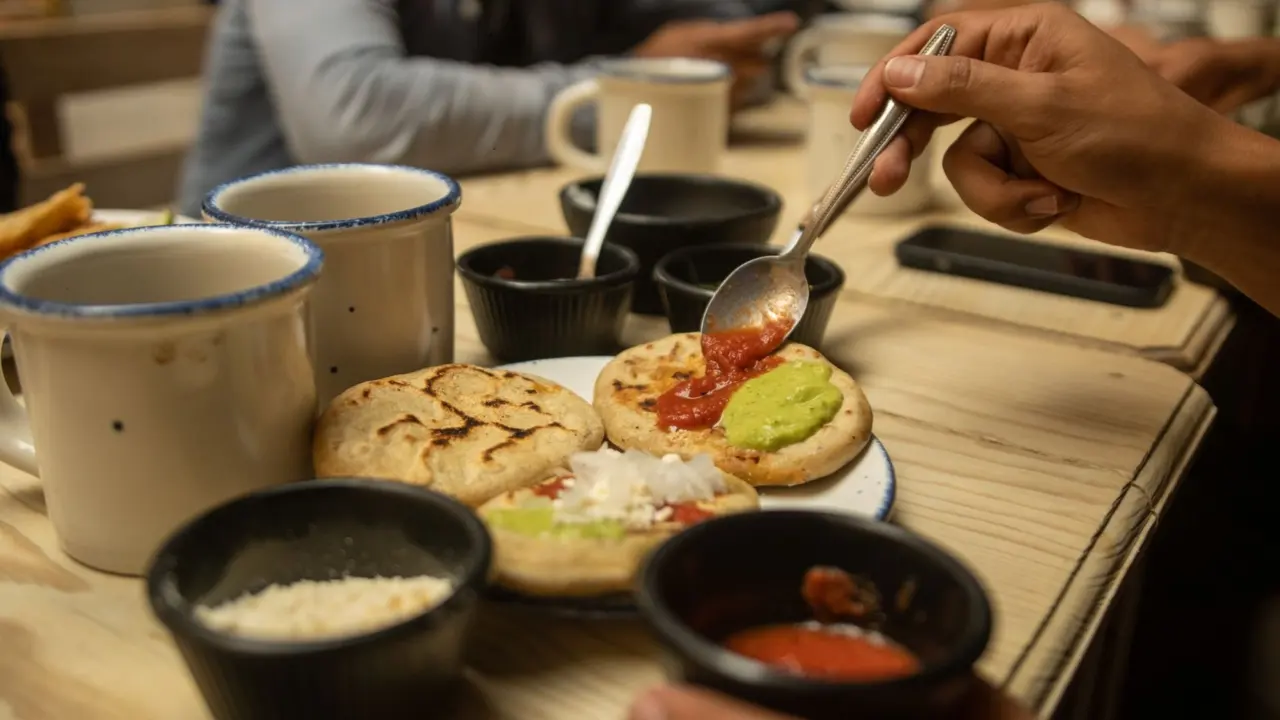
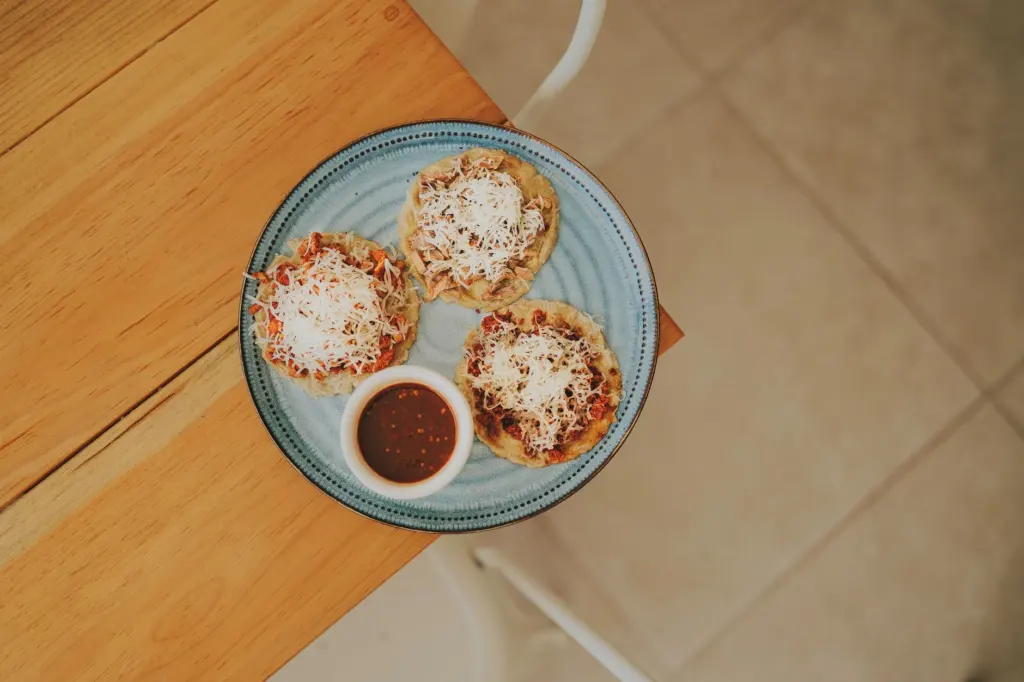
Pupusas are traditionally eaten with a cabbage relish called curtido, as National Foods notes. Chef’s Pencil describes curtido as a side dish of fermented cabbage, carrots, cucumber and other vegetables, and says pupusas are served with tomato sauce as well.
Curtido gives the dish contrast. A rich, griddled pupusa is soft and filling, and the relish adds a sharper, crunchier counterpoint, so it is worth treating as part of the dish rather than a garnish. If you make it yourself, Solid Ground advises chilling it for at least 20 minutes in the refrigerator before serving, so make it before you start on the dough.
The red sauce is a salsa of tomatoes and onions, described by The World in My Pocket as the usual companion. A spoonful of each on the same bite shows why the two accompaniments are served together.
Where to eat pupusas
You can eat pupusas all over El Salvador, and The World in My Pocket notes they often appear at breakfast. That means you do not need a special restaurant or a set time of day; the dish is built into ordinary eating.
A few practical habits make the most of it:
- Order a mix. Because cheese, pork, beans and loroco are all common, asking for several fillings lets you find your preference quickly.
- Expect the full set. Pupusas arrive with curtido and tomato salsa, so you do not need to add anything else to the order.
- Try loroco at least once. It is the filling most closely tied to the region, which makes it the most informative one to taste.
Outside El Salvador the story continues, because emigration during the civil war carried the dish worldwide. If you are comparing Central American staples, Baleadas: Honduras’s Beloved National Dish — History, Recipe, and Traditions (2026 Guide) – Asmallbite covers a neighbouring country’s national dish. Food that travels with people is a familiar pattern, and the global spread of another staple is traced in The History Of Tea: From Ancient Legends To Global Rituals — A Concise 2026 Overview – Asmallbite.
Frequently asked questions
What did the Pipil call pupusas?
According to Solid Ground, the Pipil called them kukumuzin.
What does loroco taste like?
Chef’s Pencil describes loroco as having a floral flavor and a taste that is distinctive, which is why it stands apart from cheese or beans.
What if a pupusa cracks while I am shaping it?
Patch it with a bit of dough and a little oil, as Solid Ground recommends, then continue cooking.
Do pupusas have to contain meat?
No. Cheese and fried beans are among the most popular fillings, and before colonization pupusas were vegetarian.