The history of the king cake begins in Old World Europe, chiefly France and Spain, where the cake became tied to Epiphany in the Middle Ages. New Orleans later turned it into a Mardi Gras staple.
Each familiar feature of today’s cake has its own backstory: the hidden baby, the calendar and the purple, green and gold icing. For the wider picture of how celebratory dishes travel, see our guide to traditional holiday foods around the world.
From Old World Europe to Epiphany
King cake is said to have originated in Old World France and Spain, and a bakery history describes it as becoming associated with Epiphany in the Middle Ages. That link explains most of what followed. Epiphany falls on January 6, and Eater notes the cake is eaten then in honor of Epiphany, also called Twelfth Night, marking the arrival of the wise men. The cake is therefore a calendar food first and a dessert second.
The name “king cake” refers to those wise men, often called the three kings, rather than to any ruler. Clemson’s Home and Garden Information Center says the cake is usually eaten between January 6, known as King’s Day or Twelfth Night, and Fat Tuesday. The cake that began as a single-day Epiphany treat in Europe became the centre of a whole season in Louisiana.
The practical lesson is that “king cake” names a family of cakes, not a single recipe. A flaky French pastry, a Portuguese fruit ring and a Louisiana iced bread share an occasion and a hidden-object custom, but little else. The next section looks at that custom.
Why a baby is hidden in the cake
The plastic baby in a Louisiana king cake is a religious symbol. Clemson Extension explains that it symbolizes the infant Jesus because of the religious connection to King’s Day. Whoever finds the baby becomes king or queen of the evening, which keeps the game of the cake tied to the Epiphany story.
The baby is a relatively modern form of an older habit. Eater reports that king cakes around the world hide a bean, a coin, a nut, or a tiny baby figurine. The figurine became a New Orleans fixture through a commercial bakery: McKenzie’s popularized the baby trinket baked into cakes in the 1950s, and the figure was originally porcelain before plastic took over.
This helps when you meet other versions. A coin in a Greek cake and a baby in a Louisiana cake do the same job. Each picks one person from the table, and the finder receives either luck or a role. If you are choosing which tradition to follow at a gathering, the hidden-object game matters more than the particular object.
European cousins of the Louisiana cake
The Louisiana cake is only one branch. Eater’s survey of king cakes shows how different the family can be in dough, filling and timing, and the table below compares the versions it describes.
| Cake | Form and filling | Occasion or hidden token | Planning use |
|---|---|---|---|
| Galette des rois (France) | Flaky puff pastry cake, typically filled with frangipane almond cream | Sometimes topped with a paper crown | Suits anyone wanting a crisp, almond-flavoured dessert rather than a sweet bread |
| Bolo rei (Portugal) | Ring-shaped, filled with candied fruit and sometimes nuts | Eaten as the Portuguese version of king cake | Suits those who like fruit-studded festive bread |
| Vasilopita (Greece and Cyprus) | Sweet cake served as a New Year’s celebration | Traditionally served on New Year’s Day, with a coin baked inside | The right choice when the occasion is New Year rather than Epiphany |
| Banitsa | Sheets of phyllo wrapped around soft cheese | Served on New Year’s Eve and special occasions, with charms and fortunes inside | A savoury option for a table that already has plenty of sweets |
| Louisiana-style king cake | Twisted ring of cake-like bread dough with coloured icing and sprinkles | Hidden baby figurine | The version to pick for Mardi Gras season parties |
Figures and descriptions in the table come from Eater’s guide to king cake traditions.
Even within France the cake varies. A bakery history notes that La Galette de Pithiviers comes from the northern part of France, with other regional forms in the east and south. The galette des rois you meet in a bakery depends on where its baker comes from. For another national dish with a layered history, read Bacalhau And Beyond: The Complete Guide To Portugal’s National Dish In 2026 – Asmallbite, which sits alongside the Portuguese bolo rei story told here.
How king cake reached New Orleans
King cake reached New Orleans from France. Brennan’s bakery history says the cake that began in Old World Europe, chiefly France and Spain, arrived in Louisiana with that French connection and settled into the local Carnival calendar. Carnival season officially begins on January 6, the same day as Epiphany. This overlap is why the cake fits Louisiana so neatly: the religious feast day and the party season start together.
Popularity came later than arrival. A Gambino’s bakery history states that king cake actually became popular in New Orleans in the 1950s. That timing matches the McKenzie’s baby trinket, so the modern New Orleans cake, with its figurine and bakery-counter presence, is largely a mid-twentieth-century development on top of a much older European custom.
The colours came from the city’s Carnival organisations rather than from the cake itself. The purple, green and gold palette originated in New Orleans with the first parade of the Rex Organization in 1872. Eater adds that the Louisiana-style cake is almost always decorated in those Mardi Gras colours, so a cake in those shades points to Louisiana rather than France or Portugal.
Louisiana’s food history is full of this kind of blending. If you want another example of how cooks there combined inherited traditions, the history of gumbo follows a similar path.
The king cake calendar
King cake season runs from January 6 until Fat Tuesday, so its length changes from year to year. The reason is that Mardi Gras is tied to Easter. Clemson Extension says it is celebrated exactly 47 days before Easter Sunday, which puts it anywhere from February 3 to March 9.
This has a practical consequence. With an early Easter the season is short, and with a late Easter it stretches across many weeks. If you are planning a party, check the Mardi Gras date for the year before ordering, because bakeries sell king cake through the whole window and the last weekend before Fat Tuesday is typically the busiest.
Outside Louisiana the calendar is looser. Eater notes that Greek and Cypriot vasilopita belongs to New Year’s Day, while the French galette follows the Epiphany date. Choosing a version is partly a matter of choosing which holiday you are marking.
How the cake is made and served today
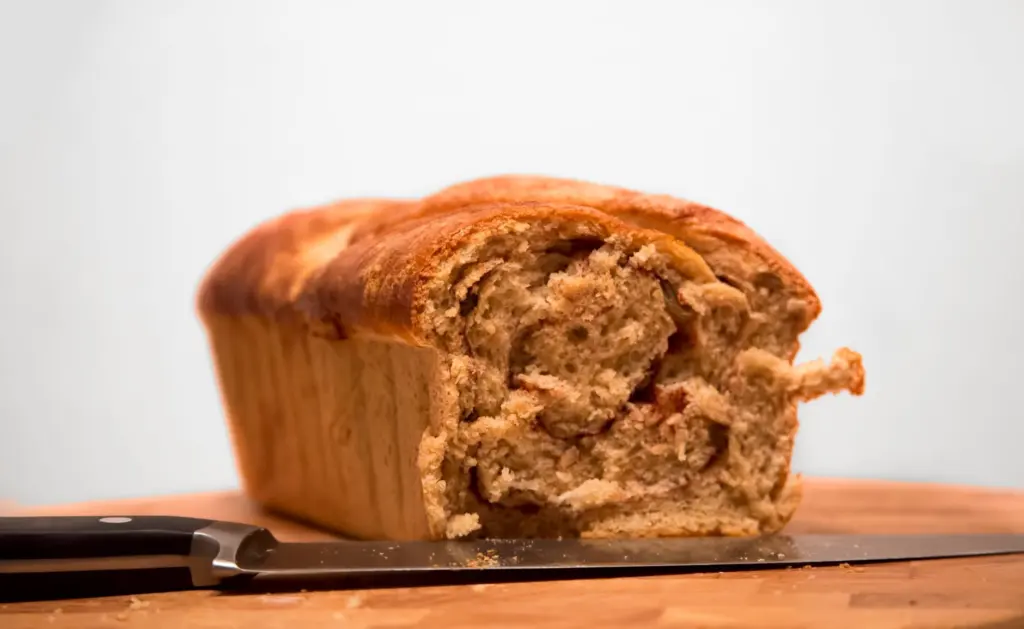
A modern Louisiana king cake is built from a rich dough. Clemson’s Home and Garden Information Center describes it as typically made of a rich brioche dough and a wide array of fillings, with cinnamon, chocolate and cream cheese among them. Eater’s description of the twisted ring of cake-like bread dough, topped with coloured icing and sprinkles, completes the picture. The enriched dough is the main contrast with the French galette’s puff pastry, and it explains why the Louisiana cake eats more like a sweet bread than a pastry.
The filling is the part most open to personal choice. Cinnamon is the closest to a classic, and cream cheese and chocolate suit people who want a dessert closer to a pastry counter. When buying, pick the filling you would eat on its own, since the icing and dough are nearly the same from one bakery to the next.
The baby itself has become a separate item. Eater reports that the plastic baby figurine is typically sold along with the already-baked cake, which means the buyer hides it. That arrangement keeps the surprise intact for guests and keeps the figurine out of the oven. It also means a shipped or bakery cake arrives with the game still to be set up.
Because the cake is a shared dish, serve it as one: cut the ring into slices, hand them out without peeking, and decide in advance who gets to hide the baby. The tradition works best when the person who hides the baby is not the person who cuts the cake.
Frequently asked questions
Is the baby baked into the cake?
Usually not by the bakery. The figurine typically comes with the finished cake and is hidden by the buyer. If you bake at home, Clemson Extension advises that the baby must be clean and made of food-grade plastic that will not melt in the cake.
What happens when someone finds the baby?
The finder becomes king or queen of the evening and takes on the responsibility of providing the king cake for the following year, according to Clemson Extension’s account of the custom.
What do the icing colours mean?
Clemson Extension gives a symbolic reading: gold represents power, green is associated with faith, and purple illustrates justice. Brennan’s bakery history traces the colour combination itself to New Orleans and the Rex parade.