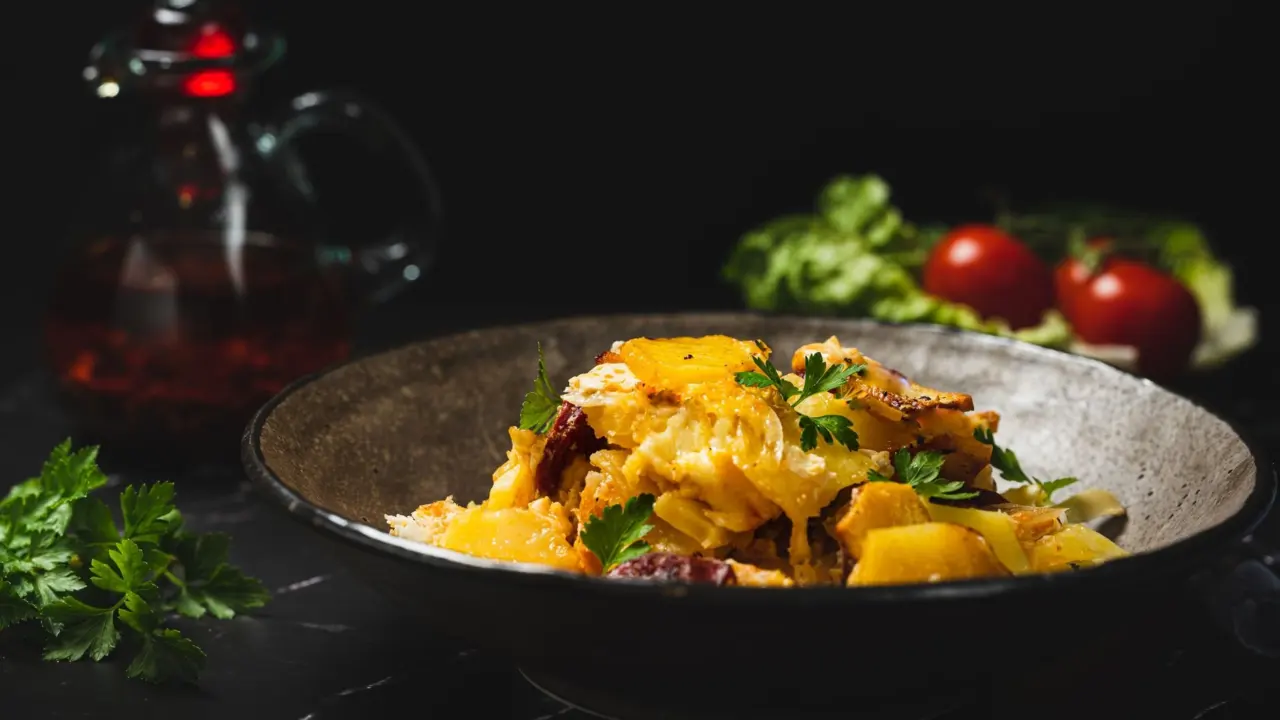
The national dish of Portugal is usually said to be bacalhau, dried and salted cod. Bacalhau à Brás, made with shredded cod, potatoes, eggs and onions, is the easiest first taste. The fish must be soaked before cooking to remove excess salt.
Bacalhau is also tied to the calendar of fasting and feasting, much like the dishes in our guide to traditional holiday foods around the world. Below, the history comes first because it explains why the fish is prepared the way it is.
Bacalhau as Portugal’s national dish
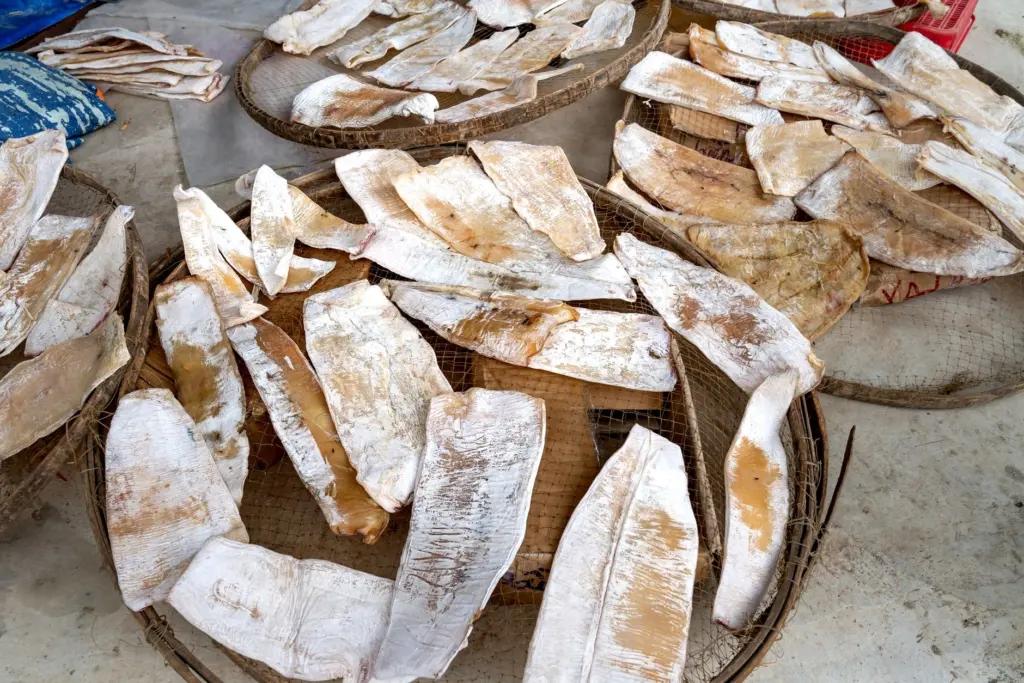
Bacalhau is the Portuguese word for dried or salted cod, as a Portuguese dishes travel guide puts it. The name covers the preserved fish itself and the many dishes built on it, which is why “Portugal’s national dish” is better read as a family of recipes than as one fixed plate.
Travel writers regularly use the label. One guide calls bacalhau à Brás a perfect way to experience Portugal’s national dish, and the same guide lists bacalhau among the country’s traditional dishes alongside pastel de nata and francesinha. In other words, bacalhau is the dish most often named as the national one, but it sits within a wider table of Portuguese food.
For a reader deciding where to start, the practical choice is bacalhau à Brás. The same guide recommends it as the best introduction for anyone new to bacalhau. It is also forgiving at home: the fish is shredded and bound with egg and potato, so the texture is soft and the saltiness is diluted across the whole dish.
How salt cod became a Portuguese staple
Salt cod did not become popular by accident. Several pressures stacked up, and each one explains a feature of the dish you cook today.
- Climate demanded preservation. Portugal’s hot, humid summers make preserving food a particularly challenging task, according to a short history of bacalhau in Portuguese society. Foods were therefore dried and salted so they would keep.
- Sailors needed food for long voyages. A Portuguese food guide notes that salt cod historically sustained sailors on long voyages, which made it a natural fit for a seafaring country.
- Religious rules favoured fish. The same history describes a prohibition on eating meat on certain days, such as Fridays and Lent, in Catholic nations. That pushed people toward fish, and preserved fish was the practical kind to keep in the house.
- Low price opened it to everyone. Before the 20th century, cod was affordable for all classes because of its low price. As the price rose, the middle class began eating it in greater amounts.
The sequence matters for how you read the dish. A food that began as cheap, durable and universal tends to be cooked simply, with pantry ingredients such as potatoes, onions, eggs and olive oil. Later, as it became a middle-class pleasure, it also became something people dressed up for occasions. That is why bacalhau appears both as a plain family supper and as a centrepiece, a pattern shared with other faith-linked foods such as The King Cake: A Sweet History From Pagan Roots To Mardi Gras Staple (2026 Guide) – Asmallbite.
Preparing bacalhau at home
Cooking bacalhau starts with the consequence of that preservation: the fish is so heavily salted that it has to be soaked before it can be eaten. One travel source describes bacalhau à Brás as made by soaking salted cod to remove excess salt, then shredding it into small pieces. Everything else in the dish is built around that step.
Soaking and shredding
Soaking is the step that decides whether the dish is pleasant or inedibly salty. Soaking time depends on the cut and how heavily it was cured, so follow the instructions on the pack or ask the seller, then taste a small piece of the fish before you commit it to the pan. If it is still sharply salty, keep soaking rather than trying to correct the dish later with extra potato or egg. Once the cod is soaked, shred it into small pieces so it distributes evenly through the other ingredients.
Building bacalhau à Brás
The classic version brings together a short list of ingredients, each with a clear job. The table sets out how each is handled and what that means in your own kitchen.
| Component | How it is handled | Cooking takeaway |
|---|---|---|
| Salted cod | Soaked to remove excess salt, then shredded into small pieces | Soak thoroughly first; the fish supplies most of the seasoning |
| Potatoes | Thin matchstick pieces, lightly fried | Cut them evenly so they cook at the same pace and stay distinct from the cod |
| Onions | Sautéed in olive oil until soft and fragrant | Cook them gently before the cod joins the pan |
| Eggs | Beaten and mixed through the cod, potatoes and onions | They lightly bind the mixture rather than turning it into a firm cake |
| Garlic and parsley | Mixed in with the dish | Fresh parsley adds a green note against the rich egg and oil |
| Olives | Placed on top | Use them as a topping, not as a mixed-in ingredient |
Component details come from a Portuguese dishes guide, which lists cod, shredded potatoes, eggs, onions, garlic, parsley and an olive topping, and from a travel guide to Portuguese food, which describes the potato, onion and egg handling.
The order of work follows from the table. Fry the potato matchsticks lightly, soften the onions in olive oil, add the shredded cod, then mix everything with beaten eggs so the eggs lightly bind the dish. Finish with parsley and olives. Serve it straight away while the egg is soft.
Decisions that suit different cooks
- First-time cooks: start with bacalhau à Brás. Its short ingredient list and shredded format make the soaking result easy to judge by taste.
- Cooks short on time: plan the soak ahead, because it cannot be hurried by cooking the fish longer. Starting early matters more than any other choice.
- Cooks who like richness: olive oil does the heavy lifting here, softening the onions and balancing the salt. Use one you would be happy to taste on its own.
Beyond bacalhau: other Portuguese dishes
Bacalhau is not the whole of Portuguese cooking, and regional dishes show how much the country’s coast shapes its food. Cataplana, described by a Portuguese dishes guide as a seafood dish originating in the Algarve, is one of the most traditional Portuguese dishes and a useful reminder that fish cookery varies by region.
Olive oil is a thread running through several of them. A Portuguese food guide describes octopus with potatoes as roasted with plenty of garlic and a generous amount of Portuguese olive oil, the same pantry trio of potatoes, garlic and oil that supports bacalhau à Brás. If you enjoy one, the other is a natural next step to cook.
The same guide also names pastel de nata and francesinha as traditional dishes, so a fuller picture of Portuguese eating includes a pastry and a sandwich as well as fish. Readers comparing how countries choose a single symbolic dish may also like Is Paella Spain’s National Dish? The Complete Guide To Spain’s Culinary Symbol (2026) – Asmallbite.
Frequently asked questions
What does bacalhau mean?
Bacalhau refers to dried or salted cod, and it is also the name given to the many dishes made from it.
Which bacalhau dish should a beginner try first?
Bacalhau à Brás is the usual recommendation for newcomers. Its shredded cod is mixed with potatoes and eggs, so the fish is easy to approach.
Why did cod move from everyday food to a middle-class favourite?
Cod was cheap enough for all classes before the 20th century. When its price increased, the middle class began eating more of it.
Is bacalhau à Brás served with olives?
Yes. The dish is topped with olives, while the cod is mixed with shredded potatoes, eggs, onions, garlic and parsley.