| Historical point | What it changes | Planning use |
|---|---|---|
| No one in 1621 called the Plymouth gathering Thanksgiving | The “First Thanksgiving” label was applied later | Describe the event as a harvest gathering of Wampanoag and English people in captions, menus and lessons. |
| Early colonial Thanksgiving was a regional, solemn observance centred on fasting and quiet reflection | The feasting holiday is a later development | Do not present colonial days of thanksgiving as dinner parties. Keep the feast and the reflection as separate threads. |
| Congress set the holiday by law in 1941 as the fourth Thursday in November | The date now has a legal definition | Plan travel, shopping and cooking around the fourth Thursday in November. |
| A 1621 account describes four men hunting fowl in a day, enough to serve the company almost a week | The documented food was hunted game and fowl, not a fixed recipe set | Build a history-minded menu around game, corn and shellfish, and treat modern sides as later additions. |
These points come from the National Archives exhibit on Thanksgiving perspectives and Plimoth’s Thanksgiving guide for students.
The history of Thanksgiving runs from a 1621 harvest gathering at Plymouth through Lincoln’s 1863 proclamation to a 1941 law, per the National Archives; the 1621 meal was a single root, not the whole origin.
What the history changes in practice
The most useful consequence of the record is that the holiday has several layers: harvest gratitude, a colonial religious observance, a presidential proclamation and a legal date. Which layer you emphasise depends on the setting.
- Name the guests accurately. The National Archives states that in autumn 1621 at least 90 Wampanoag and 52 English people took part. The National Geographic Kids account adds that the region had been the home of the Wampanoag people for over 12,000 years in southeastern Massachusetts and eastern Rhode Island, so the story is not only a settler story.
- Match the framing to the audience. A classroom or museum-style telling suits the full chronology below. A family dinner suits a short acknowledgement that the day began as a regional, solemn observance and later became a shared meal.
- Do not make 1621 the sole origin. Earlier and parallel thanksgivings existed, covered below, so “the first Thanksgiving” is better used as a historical label than as a fact about firsts.
- Expect critique alongside celebration. Native-led gatherings and protests on the day itself are part of the modern record, so teaching materials that leave them out are incomplete.
Dishes: the 1621 record against today’s table
The foods named for 1621 differ from the modern menu, and National Geographic Kids says as much. This is the most practical point for anyone planning a menu with history in mind.
What the 1621 record names
A National Geographic Kids account lists deer, corn, shellfish and roasted meat for the meal, and notes that this was different from today’s traditional feast. Plimoth quotes Edward Winslow’s letter, in which hunters killed enough fowl that, with a little help, it served the company almost a week. The word there is fowl, so the text itself does not name a turkey as the centrepiece.
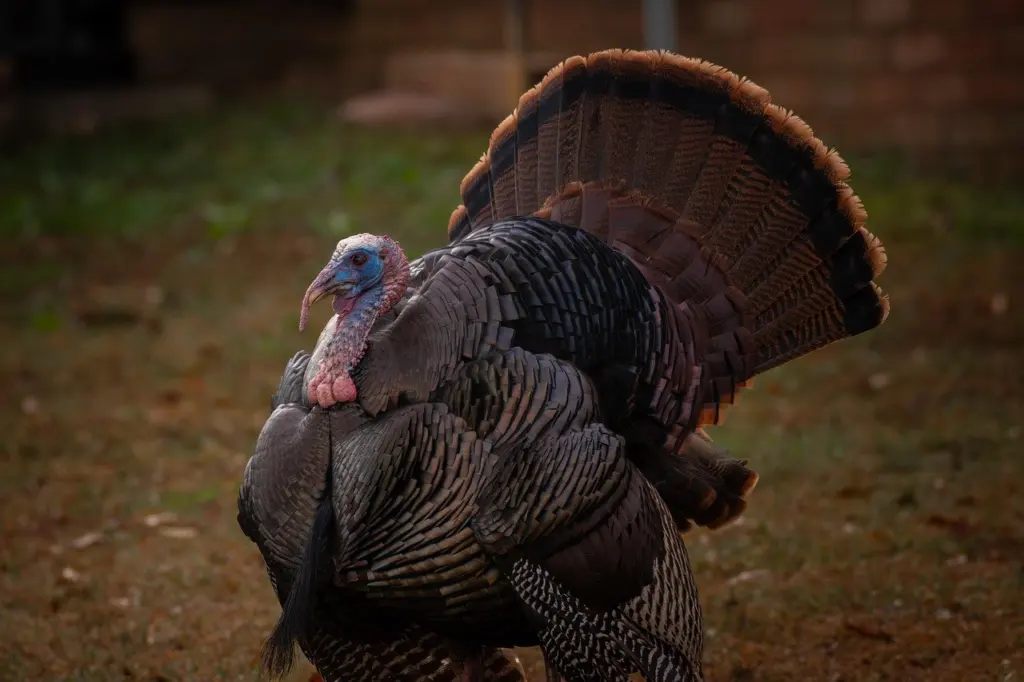
The same Plimoth page records that the gathering lasted three days, with Massasoit and about 90 men joining the English for entertainment and feasting. A multi-day meal built on hunted food explains why a menu of venison, corn and shellfish is closer to the record than a plated turkey dinner.
What today’s table adds
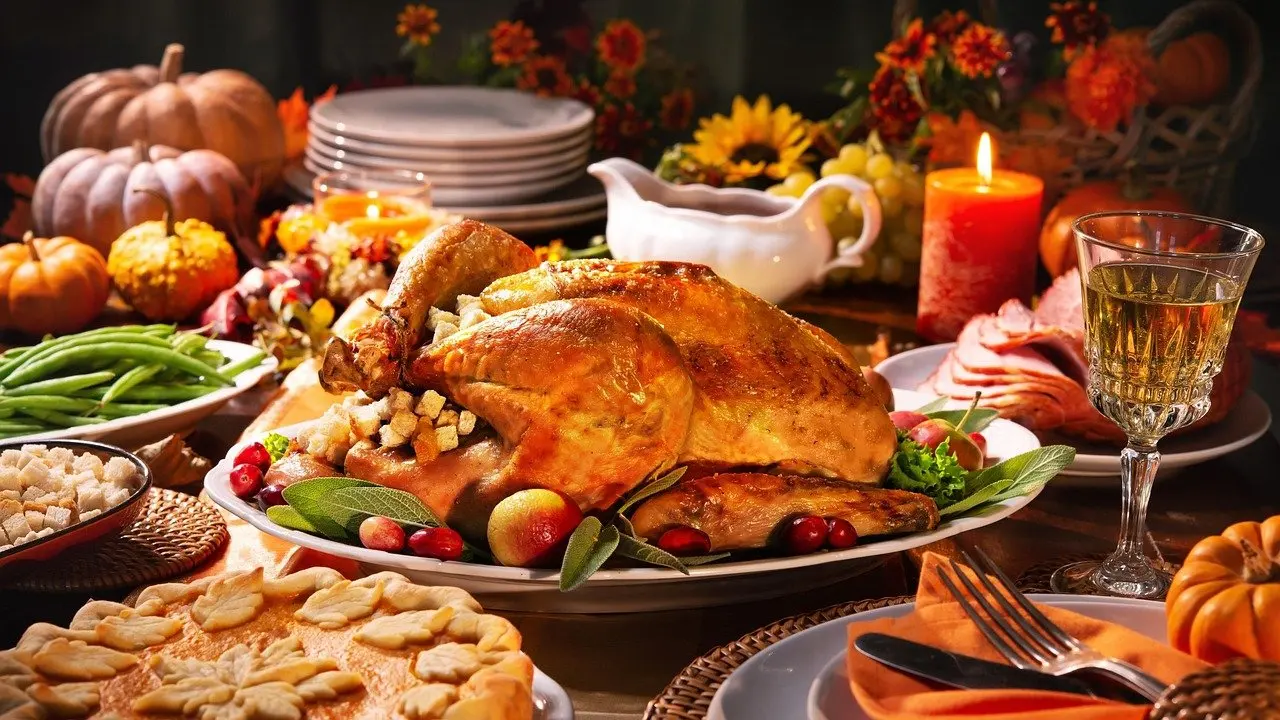
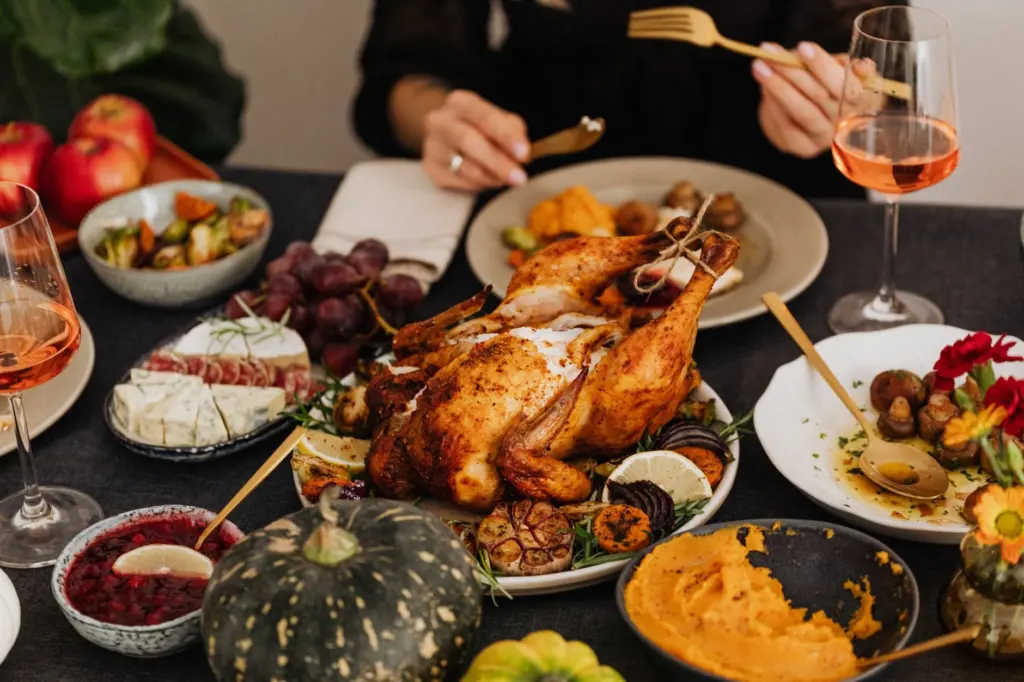
The modern spread of roast turkey, cranberry sauce and squash is a later tradition, and nothing in the supplied accounts ties those particular sides to 1621. Two practical choices follow:
- Serve a historical menu if the aim is education: game or roasted meat, corn dishes and shellfish.
- Serve the familiar menu if the aim is the holiday as it is now observed, and describe it honestly as a modern tradition rather than a recreation.
Where Thanksgiving came from
Thanksgiving grew out of many overlapping traditions of giving thanks, and the 1621 gathering is only the best-known of them.
Native observances and English harvest customs
Plimoth notes that Native People celebrated many different days of thanksgiving, including the Strawberry and Green Corn observances. The English brought their own harvest custom, called the Harvest Home. A report in the Tico Times describes an Algonquin rolling schedule of six observances per year, which shows that giving thanks was a recurring practice, not a single annual feast.
Earlier thanksgivings
The same report lists earlier thanksgiving celebrations in what is now the United States at St. Augustine in 1565, El Paso in 1598 and Jamestown in 1619. It also says Canada observed its first Thanksgiving in 1578, 43 years before Plymouth. Readers interested in how Canada’s food identity developed can continue with What Is Canada’s National Dish? Poutine, Pride, And Regional Flavors In 2026 – Asmallbite.
The 1621 gathering
Plimoth places the celebration sometime between September 21 and November 9, 1621. The National Archives says that no one at the time used the term Thanksgiving for it. Plimoth also records that the English declared a day of thanksgiving in the summer of 1623, after a long drought ended with gentle rain, so the English observance was tied to events as much as to the calendar. According to National Geographic Kids, the peace between the Wampanoag and the settlers lasted for only a generation.
In colonial New England, the National Archives explains, Thanksgiving was originally a regional observance that began as a solemn affair, a day for fasting and quiet reflection rather than feasting. The feast-centred holiday people recognise now came afterwards.
Timeline of key dates
The path from regional observance to national holiday is easiest to follow in order.
- 1565, 1598 and 1619: earlier thanksgiving celebrations at St. Augustine, El Paso and Jamestown, as recorded by the Tico Times.
- Between September 21 and November 9, 1621: the Plymouth gathering, dated by Plimoth.
- Summer 1623: the English day of thanksgiving after the drought broke, also from Plimoth.
- 1846, editor of Godey’s Lady’s Book: Sarah Josepha Hale campaigned for a national day, per National Geographic Kids. The National Archives places the push for a national holiday in the mid-19th century, after decades of her lobbying.
- October 3, 1863: Abraham Lincoln issued a Thanksgiving Day proclamation during the Civil War. The National Archives notes he was not the first president to issue one, but he set the precedent for the last Thursday of November.
- 1939: the last Thursday in November fell on November 30. Franklin Roosevelt moved the holiday to the second-to-last Thursday, 16 states refused the change, and for the next two years the country kept two dates, as the same archive describes.
- 1941: Congress passed a law establishing the fourth Thursday in November.
- 1970: Native people began gathering at the Massasoit statue in Plymouth each Thanksgiving, per National Geographic Kids. The National Archives dates the first National Day of Mourning protest in Plymouth to the 1970s.
The distinction matters for the national-holiday question. Lincoln’s 1863 proclamation made Thanksgiving a national observance, but the 1941 law fixed the fourth Thursday in November, so the holiday has been settled by statute since 1941.
Modern debates and Native perspectives
The National Archives describes the National Day of Mourning as an annual protest on Thanksgiving Day in Plymouth. National Geographic Kids notes that many Native people have gathered at the Massasoit statue since 1970. These events sit beside the family meal and are part of the day’s recorded history.
For anyone writing, teaching or hosting, the useful distinctions are straightforward:
- Separate the layers. Treat Native thanksgivings, the 1621 gathering, colonial fasting days and the national holiday as related but distinct stories.
- Attribute the 1621 meal to its records. Cite Winslow’s account of the fowl hunt and the foods listed above rather than a generic image of a modern dinner.
- Acknowledge both celebration and mourning. Both are part of how the day is observed.
Reading Thanksgiving alongside other food traditions
Thanksgiving is one example of a meal carrying national memory. Comparing it with Is There A National Dish Of Mexico? Mole, Tacos, And The Foods That Define A Nation (2026 Guide) – Asmallbite shows how other countries tie particular foods to identity. For a wider view, see our guide to traditional holiday foods around the world.
Frequently asked questions
Where did Thanksgiving come from?
It grew from many traditions: Native days of thanksgiving, English harvest customs such as the Harvest Home, earlier colonial thanksgivings, and the 1621 gathering at Plymouth. Early colonial Thanksgiving in New England was a solemn, fasting-centred observance.
When did Thanksgiving become a national holiday?
Lincoln issued a national proclamation on October 3, 1863, and Congress fixed the fourth Thursday in November by law in 1941.
What foods were really eaten in 1621?
The accounts name deer, corn, shellfish, roasted meat and hunted fowl. Winslow’s letter says a day’s fowl hunt by four men fed the company for almost a week.
Was the 1621 feast called Thanksgiving?
No. The National Archives notes that no one at the time used that term; it was applied to the gathering later.