Asked for the national dish of Argentina, many people picture a single plate of meat. The national dish of argentina is asado, which is both a way of cooking over fire and the gathering built around it, said to originate with gauchos.
Asado sits among the culinary customs covered in our guide to traditional holiday foods around the world, where food and shared occasions are inseparable. This guide separates the common misunderstandings from what is actually supported, then walks through the cuts, the fire and the table.
Asado is a method and an occasion, not one recipe
Asado is Argentina’s national dish, and it is commonly said to have originated with the gauchos, the country’s cowboys, according to Spanish Academy’s guide to Argentinian dishes. The same source makes the more useful point: asado is the way of cooking and not just the meal itself, it is the experience. That is why a question such as “what is the recipe?” never has a single answer. A cookbook description quoted on a Spotify episode calls asados legendary meat barbecues that are beloved by locals, which fits the idea of a shared event more than a fixed plate.
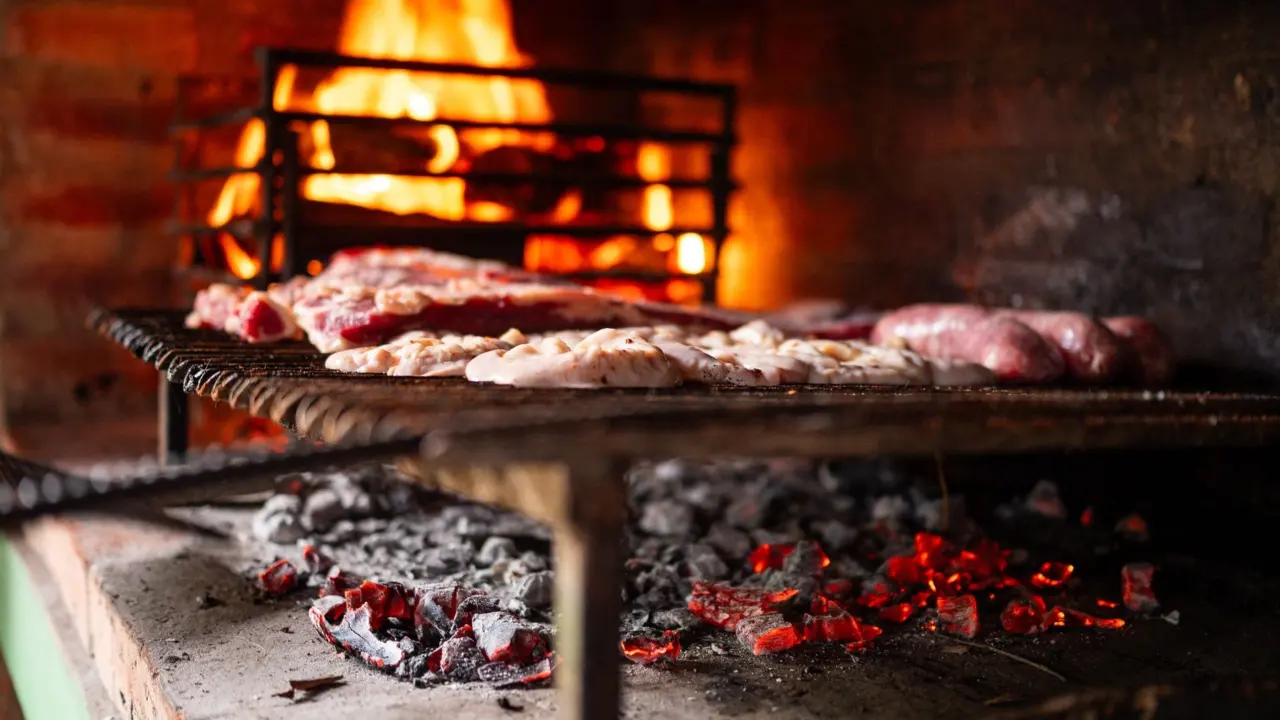
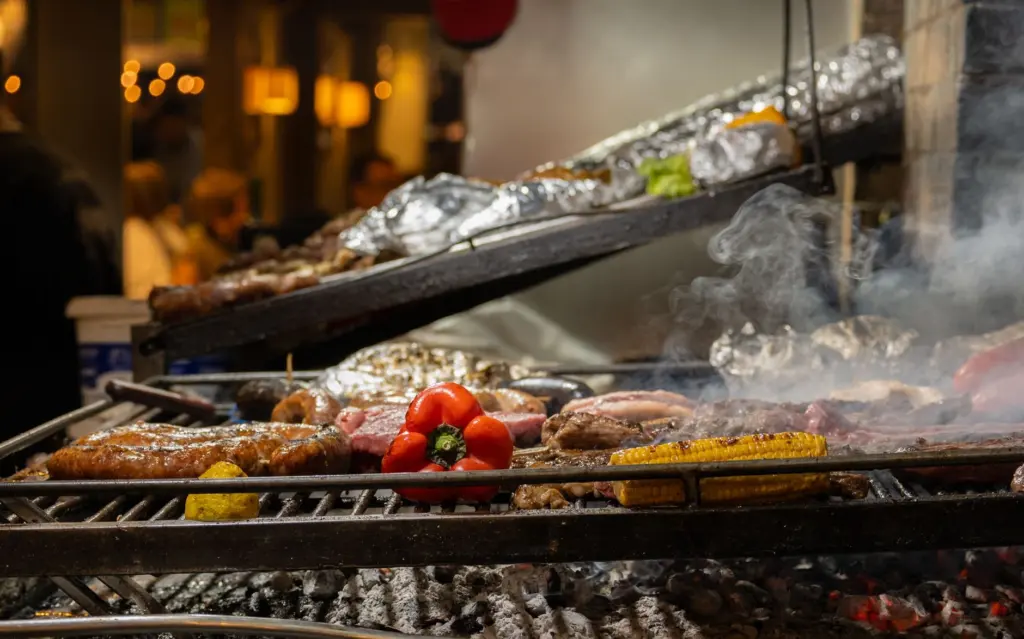
Three things make up the practice: meat cooked over fire, a grill called a parrilla, and people who gather to eat over a long stretch of time. Take away any of them and the result is simply grilled meat. The gathering itself is also known as a parrillada, so you may meet both words describing the same kind of meal.
Common misunderstandings, corrected
| Common assumption | What is supported | Planning use |
|---|---|---|
| Asado is a single dish, like a stew | It is a cooking method and an experience, not only a meal | Plan an occasion with several items, not one main plate |
| It is only beef steaks | A typical spread includes sausages, beef, ribs, pork and bread | Offer variety, and let sausages and bread fill the early part of the meal |
| It is quick backyard grilling | The classic grilling method is low and slow | Allow generous time and keep the fire gentle |
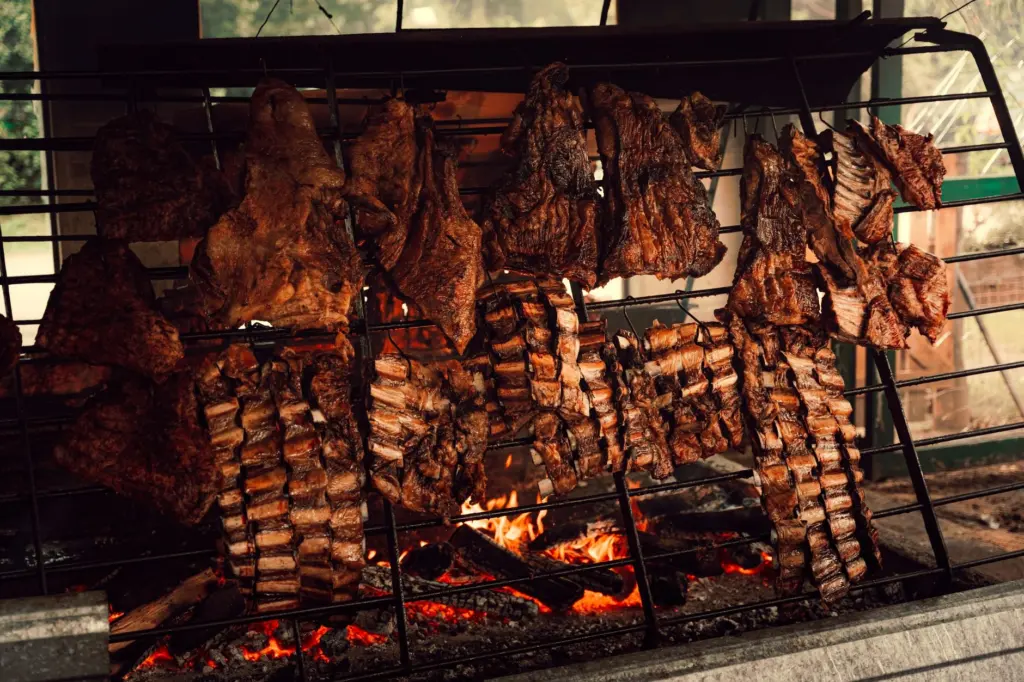
| It always happens on a tidy grill | Asado con cuero roasts large slabs of beef with the leather intact on an open fire spit, often in the countryside | Treat the grill version as one expression of a wider tradition |
| Chimichurri is a cooked sauce | It is an uncooked sauce used with grilled meats | Make it separately, with no cooking step |
The figures and descriptions above come from Spanish Academy and the Google Arts & Culture story on Argentina’s emblematic dishes.
Which cuts and meats go on the fire
A typical asado spread commonly includes sausages, beef, ribs, pork and bread, as Spanish Academy describes it. Argentina is famous for its world-class beef, so beef is the centre of the table, while the sausages, pork and bread widen the spread and give guests something to eat while the larger pieces cook.
- Sausages: they belong at the start of the meal. Smaller items finish sooner, so guests have something to eat while the larger meat is still cooking.
- Beef and ribs: these are the heart of the meal. Ribs and big joints suit a slow fire better than fast, hot cooking.
- Pork: a useful addition for variety. Cook it alongside the beef, but expect it to behave differently from beef on the grate.
- Bread: the plain companion that carries juices and keeps the meal paced.
- Whole slabs of beef: in asado con cuero, large slabs of beef are roasted with the leather intact. This is a countryside method and not a weeknight option for most kitchens.
If you are buying for a first asado, choose a mix rather than a single cut. A mixed spread is closer to the tradition and forgives uneven timing, because guests can eat whatever is ready. Ask a butcher what suits slow cooking on a grill if you are unsure which beef pieces to pick.
How asado is made: the parrilla and the fire
The parrilla is the grill, and the fire beneath it does the work. The most distinctive method described by Google Arts & Culture is asado con cuero: gauchos stick an iron cross in the beef and grill it over an open fire spit. A salmuera, a salt and herb brine, is constantly added to enhance flavour. Even at home, those details point to the logic of the whole method: salt and herbs for flavour, patient heat, and meat that is attended to rather than left alone.
A practical sequence
- Build the fire early. Give the coals time to settle into steady heat before any meat goes on, because the method relies on gentle, even cooking.
- Start with the quick items. Sausages cook sooner than big joints, so they open the meal while the rest cooks.
- Put the large pieces on slowly. Ribs and big cuts need the low and slow approach, so keep them away from fierce flames.
- Season with intent. The traditional countryside method bastes with a salt and herb brine as the meat cooks; at home, a simple salt-forward seasoning follows the same idea.
- Serve in waves. Bring food to the table as it is ready rather than waiting for everything to finish together.
The steps are a practical reading of the supported method, not a laboratory formula. Fire strength, grill design and thickness of meat all change the details, so judge doneness by the meat itself and adjust the heat rather than following a rigid script.
Timing and temperature
The one clear instruction in the supported material is that the grilling method is low and slow, which is why asado is never a rushed meal. No exact temperature is given for the traditional method, and it would be wrong to treat any single figure as the rule. Treat the fire as something to manage: if the meat is browning much faster than it is cooking through, the heat is too high.
For planning a whole meal, a commercial recipe for a traditional Argentinian Sunday asado, scaled for 8 to 10 guests, lists a 3 hr total time. Use that as a rough planning frame for a Sunday-sized gathering, and remember that the fire, the cuts and the number of people can all move it.
- Allow more time than you expect: a slow method punishes impatience more than it punishes extra waiting.
- Stagger the food: sausages first, larger pieces later, so nobody waits hungry.
- Judge by the meat: doneness depends on the piece, so check it rather than relying on the clock alone.
Chimichurri and what sits beside the meat
Chimichurri is the best-known sauce for asado. It usually includes minced garlic, chopped parsley, oregano, olive oil and vinegar, and it is an uncooked sauce used with grilled meats, as Spanish Academy notes. Because it is raw, it brings a sharp, herby contrast to rich, smoky beef, and it takes only a bowl and a knife to make.
Bread belongs on the table too, and a simple spread of grilled meats, bread and chimichurri is a good model for a first attempt. Resist the urge to add many extra dishes. The supported picture of asado is a meal built around the fire, with accompaniments kept simple so the meat leads.
Asado as ritual, and how it compares with other national dishes
Because asado is described as an experience and not just a meal, the ritual matters as much as the recipe. The person tending the fire sets the pace, the food arrives in stages, and the table stays occupied long after the first plate. That social shape is what earns asado the label of national dish, more than any single ingredient.
Other countries’ signature foods work differently. The question of which food stands for a nation is explored in Is There A National Dish Of Mexico? Mole, Tacos, And The Foods That Define A Nation (2026 Guide) – Asmallbite, while a rice dish with a shared-holiday identity is covered in Arroz Con Gandules: Puerto Rico’s Beloved National Dish (History, Recipe, And Where To Try It) – Asmallbite. Set beside them, asado stands out as a dish defined by how people cook and gather, not by one fixed set of ingredients.
Frequently asked questions
| Question | Answer |
|---|---|
| What is asado? | Asado is Argentina’s national dish and a way of cooking meat over fire. It also names the gathering around it, which is sometimes called a parrillada. |
| Which cuts are used? | A typical spread includes sausages, beef, ribs, pork and bread. In the countryside method called asado con cuero, large slabs of beef are roasted with the leather intact. |
| How is asado made? | Meat is cooked low and slow over a fire on a parrilla or an open spit. In asado con cuero, a salt and herb brine is added constantly as it cooks. |
| Who started asado? | It is said to have originated with the gauchos, Argentina’s cowboys. |
| What sauce goes with asado? | Chimichurri, an uncooked sauce of garlic, parsley, oregano, olive oil and vinegar, is the usual companion to grilled meats. |