| Decision | What is supported | Planning use |
|---|---|---|
| What to call it | Bandeja paisa is considered the country’s national dish, in a form that is relatively recent | Ask for it by name; expect arepas and sancocho to come up in the “national dish” debate |
| Where to look first | A typical dish of Antioquia and the Coffee Region | Compare cooks’ versions in those regions before judging the dish elsewhere |
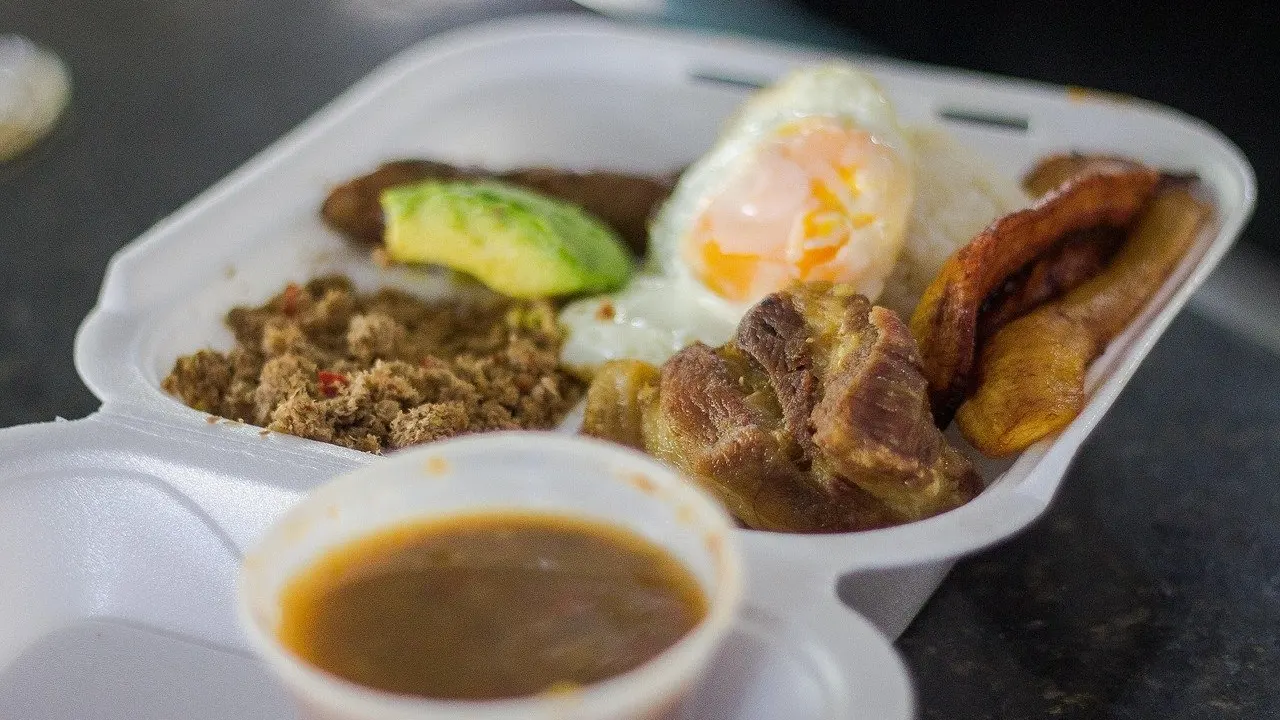
| What arrives on the tray | Red beans, rice, ground beef, chicharrón, fried egg, sweet plantains, chorizo, avocado and arepa | Order it as the whole meal, not as an add-on |
| Cooking it at home | A recipe lists 1 hour and 5 servings, with the beans soaked in water the night before | Start the evening before and cook for a group |
Components and origin follow El Balcón de las Américas’s guide to bandeja paisa, while timing and servings come from the Cocina Colombiana recipe.
Bandeja paisa is widely recognized as the national dish of Colombia: a large platter of red beans, rice, meats, fried egg, plantain and arepa from Antioquia. Arepas and sancocho are also strong contenders.
The dish carries regional identity as much as flavour, and it is one of many plates that tie a place to its table. For the wider context, see our guide to traditional holiday foods around the world.
Ordering bandeja paisa: what to expect
Bandeja paisa is a main meal, usually eaten for lunch or dinner, and it is served on a big oval tray, as Kiddle’s entry on the dish describes. That shapes how to order it: treat the tray as the meal itself rather than something to add to other courses.
- Match it to your appetite. The platter combines beans, rice, several meats, an egg, plantain and arepa, so it suits a hungry lunch or dinner better than a light snack.
- Begin in its home territory. The dish is typical of Antioquia and the Coffee Region, and it also turns up in parts of Valle del Cauca and Tolima. Those areas are the natural place to compare how different cooks build the plate.
- Judge the plate as a whole. Published component lists differ slightly: one names ground beef, another says ground beef or steak, and black pudding appears only occasionally. A plate missing one item is not necessarily a poor version.
Knowing what normally sits on the tray makes those differences easy to read.
What is on a bandeja paisa
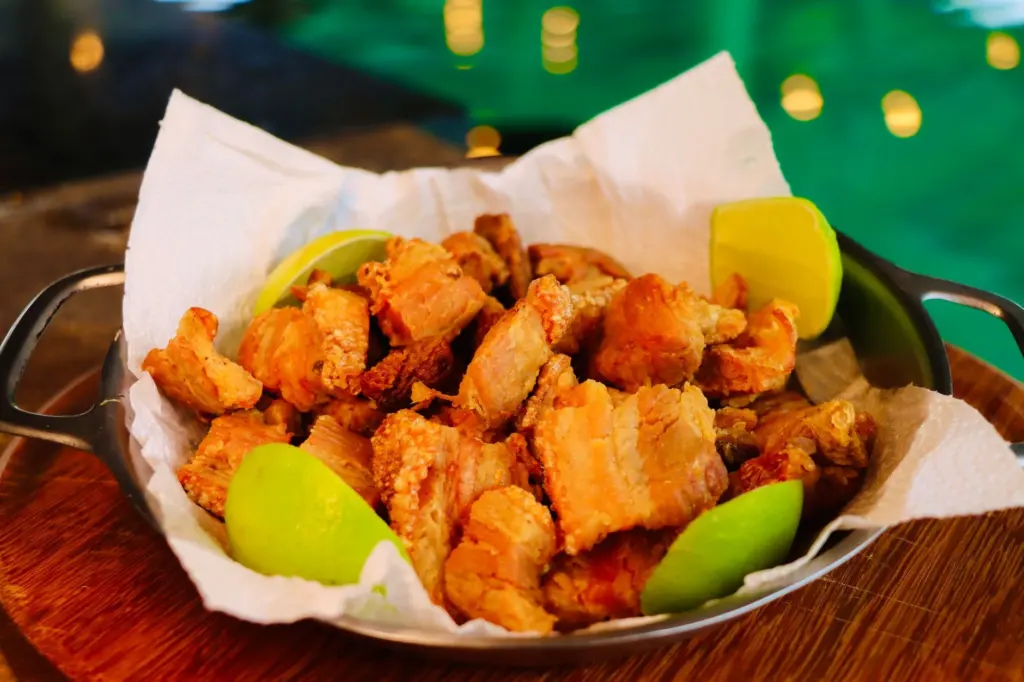
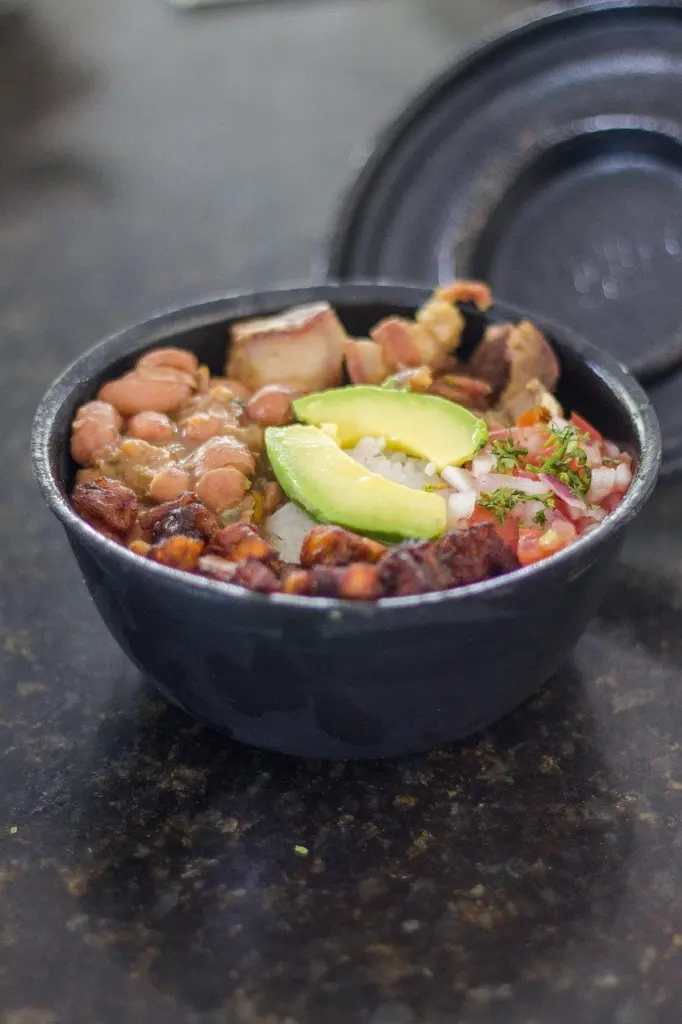
A typical bandeja paisa includes red beans, rice, ground beef, chicharrón (fried pork belly), a fried egg, sweet plantains, chorizo, avocado and arepa, according to the El Balcón de las Américas guide. A travel guide from Responsible Travel adds that the beans are cooked with spices, the rice is white, and the meat may be steak rather than ground beef. Kiddle lists hogao sauce, black pudding (morcilla), avocado and lemon among the other parts of the plate.
Red beans and chicharrón
Red beans are cooked slowly with pork, and chicharrón is crispy fried pork belly. Together they give the plate its richness: soft, savoury beans set against crisp, fatty pork. Because the appeal of chicharrón is its crunch, it suits being served promptly, and the slow-cooked beans are the part of the plate that sets the cook’s schedule.
Arepa
An arepa is a flat, round corn cake made from ground corn dough, and it comes in crispy, soft, sweet or savoury varieties. On the tray it supplies the corn element beside the rice. Since arepas vary so much, the style you are served can change the character of the plate: a crisp arepa behaves differently from a soft one.
Rice, egg, plantain and avocado
White rice, a fried egg, sweet plantain and avocado fill out the platter. In eating terms, the plantain adds sweetness and the avocado a soft, cool contrast to the fried meats, while the rice and egg tie the separate parts together. Hogao sauce and a squeeze of lemon are the finishing touches named among the other parts of the plate, and black pudding is an occasional addition.
With the parts identified, the next question is how this combination came to be.
Where bandeja paisa comes from
Bandeja paisa is a typical dish of Antioquia and the Coffee Region. One travel guide says it was originally crafted to fuel farmers in the Antioquia region with a hearty meal, and El Balcón de las Américas notes that many believe it was meant for field workers, giving them a full day’s worth of energy. Read that as a popular belief about purpose rather than a documented record. It does explain the scale of the tray, which is built for a long working day rather than a light bite.
The same guide says the dish’s origins combine the many cultures that shaped Colombia over the centuries, naming indigenous peoples, Spanish settlers and Africans. That layered background is the best reason to read the platter as a story, not just a heap of food: each part of the tray sits on top of a long history of mixing.
Today bandeja paisa is considered the country’s national dish and is widely recognized as such. Because arepas and sancocho are also named as strong contenders, the safest way to use the title is as a statement of wide recognition, with bandeja paisa leading the conversation.
Making bandeja paisa at home
The Cocina Colombiana recipe lists 1 hour and 5 servings for the main course, and it says the red beans should be soaked in water to cover the night before preparation. The soaking happens before that hour, so the plan really begins the evening before.
- Plan the beans first. Soak them overnight, then cook them slowly with pork, as Kiddle describes. They set the pace for everything else.
- Cook for a group. The recipe yields 5 servings, so it suits a table of guests better than a single portion.
- Use pre-cooked corn flour for the arepas. The recipe calls for white or yellow pre-cooked corn flour, so either colour works.
- Stay flexible with the extras. Black pudding appears only occasionally, so leave it out if it is hard to find and keep the core components.
Comparing national dishes
Bandeja paisa is one of several national dishes covered on this site. For a contrast in how another country’s signature plate is built, read Arroz Con Gandules: Puerto Rico’s Beloved National Dish (History, Recipe, And Where To Try It) – Asmallbite or Baleadas: Honduras’s Beloved National Dish — History, Recipe, and Traditions (2026 Guide) – Asmallbite.
Frequently asked questions
How do I mix arepa dough for a home bandeja paisa?
The Cocina Colombiana recipe uses 3 cups of pre-cooked corn flour, white or yellow, and 2 cups of warm water. Pour the warm, salted water over the flour and mix until you have a consistent dough.
Is bandeja paisa meant to be shared?
It is served on a large platter that invites sharing in spirit, yet each person enjoys it individually.
Is bandeja paisa an old recipe?
Not in its present form. Its roots draw on several cultures, but El Balcón de las Américas describes its current form as relatively recent.
Is there a bigger version of the dish?
Yes. An extended regional version in Antioquia adds grilled steak, grilled pork and liver to the usual ingredients.