| Decision | Supported detail | Planning use |
|---|---|---|
| Batch size | Written to make either two or four pancakes | Make the four-pancake batch when each person wants a short stack; the smaller batch suits a light breakfast. |
| Flour | 1/4 cup (31g) all-purpose flour for a two-pancake batch | Use the gram figure when a scale is available, then scale every ingredient together for the larger batch. |
| Leavening | 1/4 teaspoon baking powder | Measure it level. Baking powder is the only lift in this egg-free batter. |
| Milk and fat | 1/4-1/3 cup milk; 1/2 tablespoon oil or melted butter | Start with the lower milk amount. The range lets you adjust how thick the batter pours. |
| Pan heat | 350°F griddle or a skillet over medium heat | Preheat the pan before the first pour, and stay at medium on a stovetop. |
| Timing | Until bubbles form and break on the first side, then a shorter time on the second | Flip when bubbles break the surface. Treat the clock as a check, not the signal. |
Measures and timings come from Crazy for Crust’s small-batch pancakes and King Arthur Baking’s pancake recipe.
A pancake recipe for two starts with 1/4 cup (31g) all-purpose flour and 1/4 teaspoon baking powder per two-pancake batch. Cook it in a skillet over medium heat until bubbles pop and the bottom turns golden.
Pancakes are a morning dish, but the same small-batch thinking applies to other meals. For those, browse our easy weeknight dinner recipes. The notes below turn the table into decisions about batch size, swaps, mixing and pan control.
Ingredients and batch size for two
Batch size is the first decision. Crazy for Crust writes its recipe for either two or four pancakes. Baking Mischief’s banana recipe for two makes exactly four good-sized pancakes. For two adults, the four-pancake batch is the safer choice. Scale every ingredient up together so the ratio of flour, leavening and liquid stays the same.
- Flour: 1/4 cup (31g) all-purpose flour is the base for a two-pancake batch. All-purpose flour is the only flour the recipe needs, so no special purchase is involved.
- Baking powder: whisked into the flour with the salt and sweetener so it distributes evenly, as King Arthur Baking’s method describes.
- Milk: between 1/4 and 1/3 cup. Any kind of milk works, regular or nondairy.
- Fat: 1/2 tablespoon vegetable oil or melted butter. Oil is the simpler option because it needs no melting.
- Sweetener: a small amount of sugar or syrup in the batter. Food Faith Fitness stirs 1 tablespoon maple syrup into its small-batch recipe and keeps more for serving.
- Egg: none. This version is egg-free by design and relies on baking powder for lift.
Method for two
The method is short enough that the pan, not the bowl, is where attention goes. Follow these steps in order, and mix the batter only once the pan is on the heat.
- Heat the griddle or skillet using the settings in the pan section below.
- Whisk the flour, baking powder, salt and sweetener in a bowl so the leavening is spread evenly.
- Add the milk and the oil or melted butter. Stir only until the flour disappears, and leave a few lumps.
- Pour the batter onto the hot pan in rounds, leaving room around each one for flipping.
- Cook until bubbles rise and begin to pop and the bottom is golden, then flip.
- Finish the second side and serve hot, with syrup.
That sequence follows Crazy for Crust’s small-batch method. It also keeps the batter from sitting long, which matters for the reason covered in the fluffiness section.
Dairy-free and other swaps
Yes, these pancakes can be made dairy-free. Two ingredients carry the dairy: the milk and, if you chose it, the butter. Crazy for Crust says any kind of milk, regular or nondairy, works, so a nondairy milk goes in at the same volume range. Its base recipe uses vegetable oil, and it lists coconut oil as an alternative. Melted butter also works as a swap, as Baking Mischief notes, but butter is dairy, so skip it when avoiding dairy.
- Dairy-free setup: nondairy milk plus vegetable oil or coconut oil. Because the batter has no egg, this combination removes both egg and dairy from the batter.
- Dairy-friendly upgrade: buttermilk is an option for households not avoiding dairy. Food Faith Fitness’s whole-wheat small-batch recipe uses low-fat buttermilk where other recipes use plain milk.
- Part-oat flour: King Arthur’s full-size recipe replaces 1/2 cup (60g) of the all-purpose flour with 1/2 cup (46g) ground oats or oat flour. For a two-person batch, keep that ratio and scale it down along with the rest of the recipe.
Swap one ingredient at a time. A batter that changes milk, fat and flour together makes it hard to tell which change altered the texture.
Making pancakes fluffier
Fluffier pancakes come from restraint more than from extra ingredients. Three choices decide the result, and each is easy to control in a small batch.
- Stop stirring early. King Arthur says a few lumps in pancake batter is fine and preferable to overmixed batter. A smooth batter usually means too much stirring.
- Keep the wait short. Crazy for Crust advises mixing the batter right before cooking, because it thickens as it sits. Food Faith Fitness rests its batter for about 10 minutes so the baking powder can activate. Reconcile the two by resting only briefly with the pan already heating, and pour straight afterwards.
- Measure the leavening level. With no egg, baking powder is the only source of lift in this recipe, so an uneven or short measure shows up as flat pancakes.
Why baking powder and gentle mixing matter
A pancake guide on Lemon8 explains that baking powder creates bubbles that expand when the batter hits heat. The same guide notes that overmixing develops gluten in the flour, which makes pancakes tougher and less airy. Those two points explain the advice above. Bubbles need an intact batter to expand into, and gluten built up by stirring works against them.
Pan heat and flip timing
Pan control matters more here than in a larger batch, because only a few pancakes sit in the pan at a time. Crazy for Crust says to preheat a griddle to 350°F or heat a skillet over medium heat. It also says a nonstick skillet or griddle works best. Baking Mischief adds that the skillet should stay at medium, because any higher and the pancakes will burn. If the first pancake browns before bubbles appear, lower the heat before pouring the next.
For timing, King Arthur cooks the first side until bubbles begin to form and break, about 2 minutes, then the second side for 1 1/2 to 2 minutes. Food Faith Fitness gives a slightly longer window: about 2-3 minutes until bubbles form and the edges look set, then about 2 minutes more. The two ranges overlap, so flip by sight. Look for popping bubbles and a golden underside rather than watching the clock. A pancake flipped too early tears, and one left too long on the first side overbrowns before the centre is done.
Serving the stack
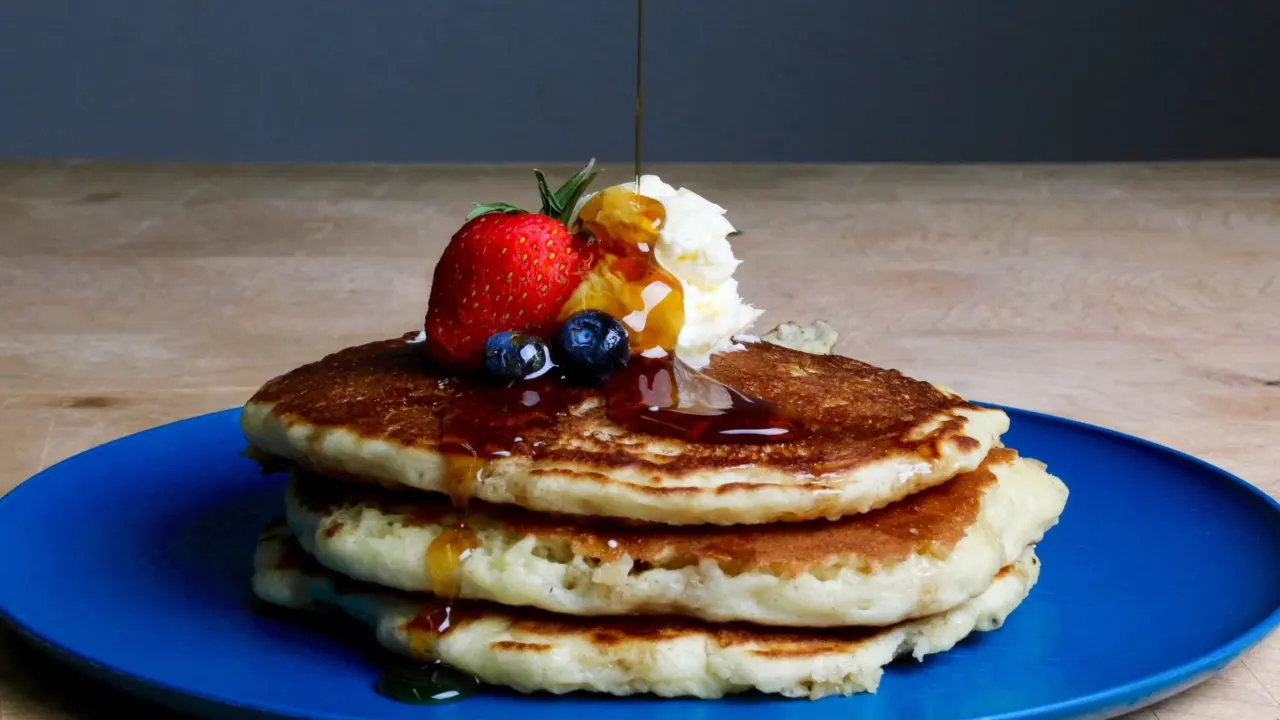
Crazy for Crust’s instruction is simply to serve hot with syrup. Pancakes cooked in a small batch cool quickly, so plan the pouring and plating for the moment the second side finishes rather than holding them.
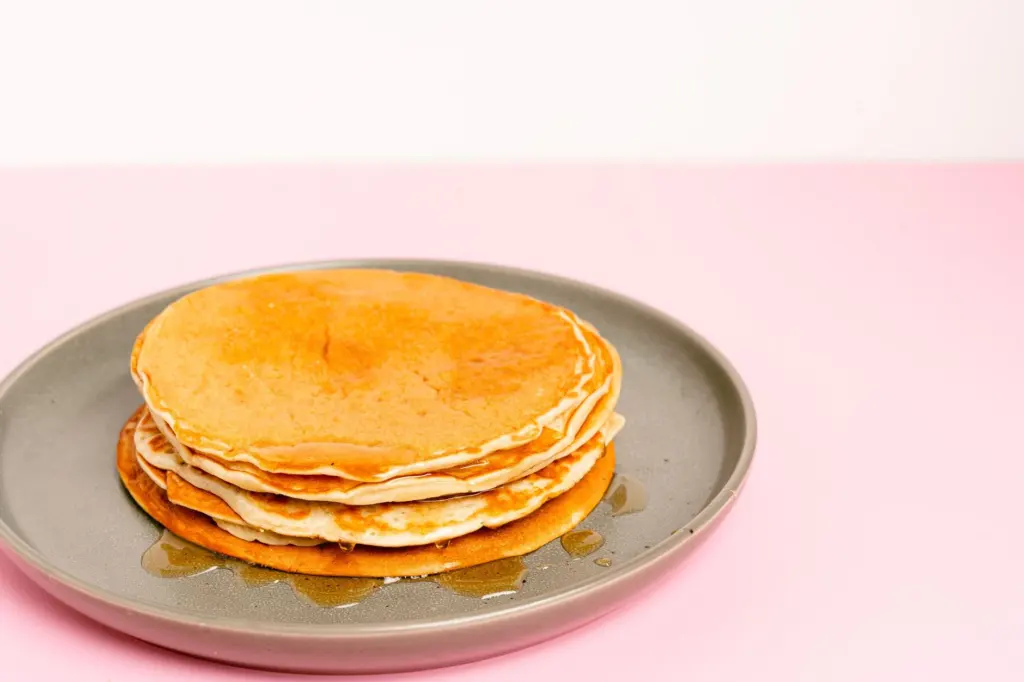
Syrup and butter
Maple syrup is the standard topping in the recipes that supply these measures, and Food Faith Fitness reserves extra syrup for the table in addition to what goes into the batter. A pat of butter on the top pancake melts as the stack sits. Keep the syrup warm if possible so it does not cool the pancakes.
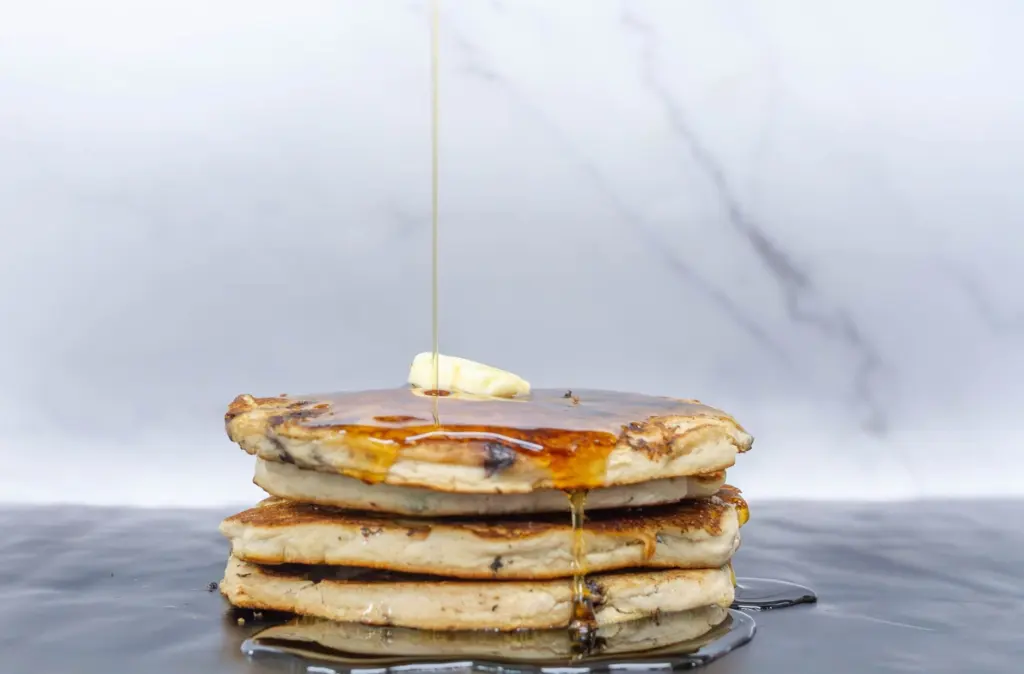
When breakfast is done and the question turns to a savory meal later, How To Season Carne Asada: A Simple 5-Step Marinade For Juicy, Authentic Flavor – Asmallbite covers a marinade for the evening. One‑Pan Chicken Orzo: Creamy, Quick Dinner You Can Make in 30 Minutes – Asmallbite is a quicker, single-pan option.
Frequently asked questions
Do these pancakes need an egg?
No. Crazy for Crust describes the recipe as egg-free by design, and it is still fluffy and moist because baking powder does the leavening.
Is a nonstick pan necessary?
A nonstick skillet or griddle works best, according to Crazy for Crust. King Arthur’s recipe instead calls for a heavy frying pan over medium heat, so a sturdy skillet is also an accepted choice.
What temperature should an electric griddle be?
Settings differ by recipe. Crazy for Crust preheats a griddle to 350°F, while King Arthur sets an electric griddle to 375°F. Start at the lower setting and raise it only if the pancakes cook too slowly.