The surest way to learn how to tell if fresh eggs are bad is to smell the egg and look at it after cracking it into a separate bowl. The float test and candling only estimate age, not safety.
The checks below run from most to least direct. For more everyday basics, see our kitchen tips for beginners.
What the checks actually measure
An egg can be old without being spoiled, and that difference decides which test deserves your trust. Australian Eggs explains that eating a bad egg raises your exposure to bacteria that cause food poisoning, such as Salmonella and E. coli. Spoilage is the real concern, so the best tests look for signs of it directly.
Some tests look at freshness instead. An egg producer’s guide says the float test reveals relative age but does not measure safety. Treat age tests as a first screen and spoilage tests as the deciding step.
- Smell after cracking: the most direct sign, because a spoiled egg gives itself away immediately.
- Colour and mould inside and out: a second direct sign that backs up the smell.
- Float test: useful for sorting a batch by age, but not a safety check.
- Candling: shows the interior structure without opening the egg, which helps when you have no label.
- Carton date or code: tells you when the egg was packed, not what condition it is in now.
Smell and appearance after cracking
Crack each egg into a small separate bowl before adding it to a recipe. That way one bad egg cannot ruin a whole batter or pan, and you can judge it in good light.
The smell test
Australian Eggs says good eggs do not smell at all, while an off egg gives a slight sulfuric smell. A producer guide describes a spoiled egg as having an unmistakable sulfur-like or rotten smell, raw or cooked. Because a fresh egg is odourless, any sulfur note is enough reason to bin it. Do not try to cook it through or mask it with other ingredients.
Colour and mould
The same producer guide lists pink, iridescent or greenish colouring, and any spot of mould, as signs of bacterial spoilage. Discard an egg showing any of these, even if it passed the float test. A fresh egg should look clean and unremarkable, so anything unusual deserves suspicion. Unlike the age-based tests, this check is a verdict on the egg itself.
The float test
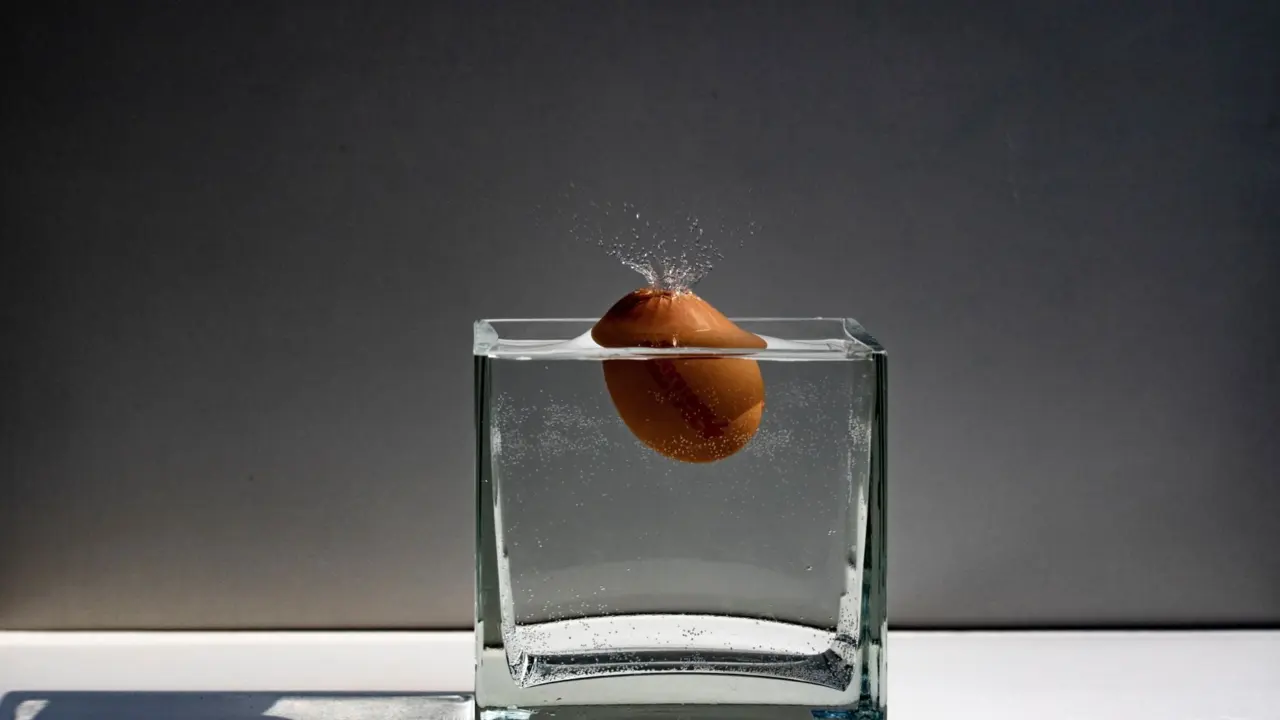
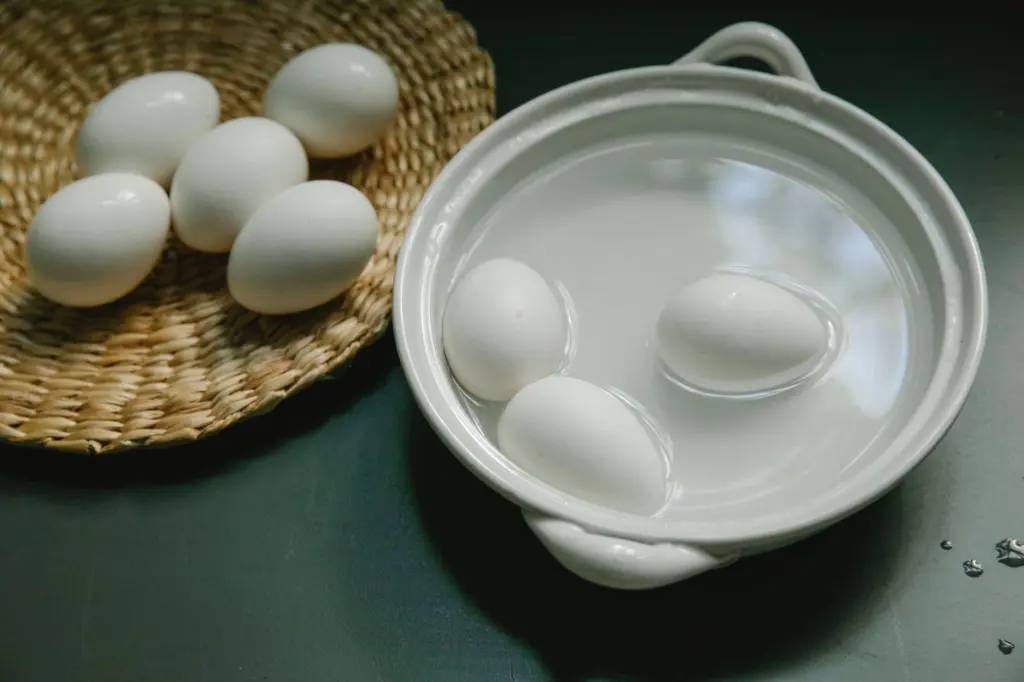
The float test needs only water and a container deep enough for the egg to move freely. It works as a quick way to sort eggs by age, which is why it suits a basket of farm eggs or a carton with no readable date.
How to run it
- Fill a deep bowl or tall glass with water.
- Lower the egg in gently so it does not crack against the bottom.
- Watch where it settles and how it sits.
- Remove it and dry it before storing it again or cracking it for the smell and colour checks.
Reading the result
| What the egg does | What it suggests | Planning use |
|---|---|---|
| Sinks and lies flat on its side | Fresh; one feed retailer, quoting the Farmers’ Almanac, ties this to an age under 1 week | Use freely, then confirm by smell when cracked |
| Bobs somewhere in the middle of the water | Probably still okay, but ageing | Tossing is the safer call if you have any doubt |
| Floats | No longer fresh | Discard; this is an age-based estimate rather than a safety test |
Figures and outcomes are drawn from a feed retailer’s freshness guide and an egg brand’s float test explainer.
Does the float test work?
Yes, for what it claims to do: it separates fresher eggs from older ones. It does not prove an egg is safe, and a sinking egg can still be spoiled. A floating egg is best discarded on age grounds alone, because it is no longer fresh. A bobbing egg is the borderline case. For anything that is not clearly sinking, crack it into a bowl and rely on smell and colour before you decide.
Candling for a look inside
Candling lets you inspect an egg without breaking it. According to the feed retailer’s guide, you hold the egg to a light source in a dark room and observe the contents. A fresh egg shows a small air cell and a clear outline of the yolk and albumen. Older eggs show a larger air cell.
Candling suits a home flock or a market purchase with no date, where you want to sort eggs before cracking any. It is slower than the float test, and it shows structure rather than spoilage. Treat a large air cell or a blurred interior as a prompt to use that egg soon, or to inspect it closely when cracked, rather than as proof it has gone bad.
Carton dates and Julian codes
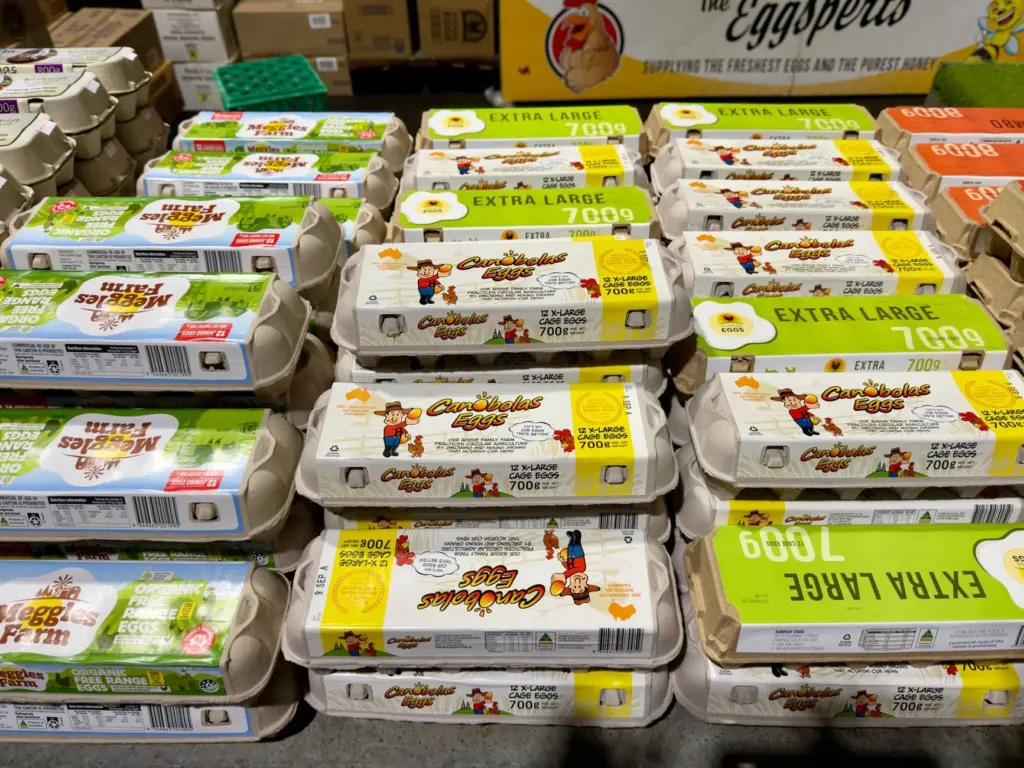
Cartons carry a date that helps you work out how long an egg has been in circulation. On USDA-graded cartons, a three-digit Julian code from 001 to 365 gives the day of the year on which the eggs were packed. Read it as a calendar position: a low number means packed early in the year, a high number late in the year.
The code is most useful for rotation. When two cartons sit in the fridge, use the one with the earlier pack day first. It tells you nothing about how the eggs have been stored since, so a date alone never replaces the smell and colour checks. For keeping other dated items in order, the pantry guide How To Organize Your Pantry: Simple Steps For A Tidy, Time-Saving Kitchen In 2026 – Asmallbite is a useful companion.
Storing eggs after you check them
Good storage keeps a fresh egg fresh, so the checks above matter less. The producer guide advises keeping eggs in their original carton in the coldest part of the refrigerator, not the door, at 40°F (4°C) or below. The door swings with every opening, so the body of the fridge is the steadier home.
The same guide sets a firm ceiling on time out of the fridge: no more than 2 hours at room temperature, for eggs raw or cooked. Treat that as a limit, not a target. If eggs have sat out on a counter or a picnic table for longer, discard them rather than relying on a float or smell check. The rule also applies to cooked eggs, so the habits behind how long do leftovers last in the fridge apply here too.
Frequently asked questions
How long do fresh eggs last in the fridge?
In Australia, the best-before date on eggs is calculated as six weeks from the day the eggs are packed into the carton. Keep them cold in the original carton, and read the Julian code on US cartons to find the pack day.
How long do hard-boiled eggs keep?
Australian Eggs says hard-boiled eggs last up to 1 week in the refrigerator if they stay in the shell, and about 5 days once peeled. Refrigerate them within 2 hours of cooking.
When do symptoms appear after eating a bad egg?
Symptoms typically develop between 6 and 48 hours after eating a contaminated egg and can last 4 to 7 days.
Is a floating egg always unsafe to eat?
A floating egg is no longer fresh, and the test is an age estimate rather than a safety check. Discard it anyway. If you are unsure about a bobbing egg, throwing it away is the safer choice.