| Pantry decision | Supported effect | Planning use |
|---|---|---|
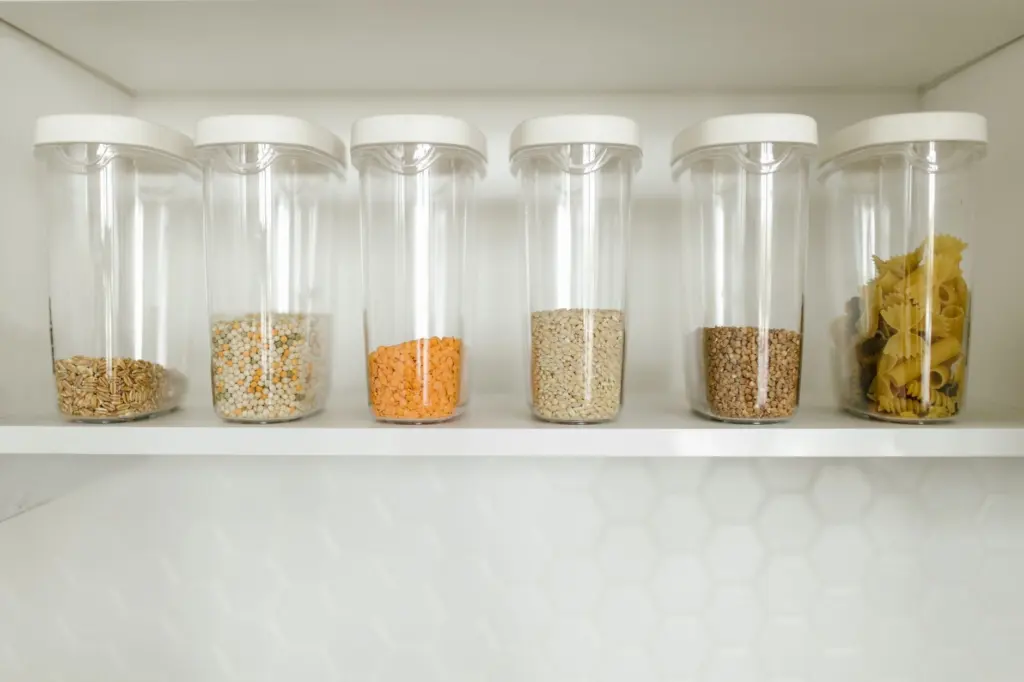
| Decant dry goods into clear, airtight containers | Saves space and lets you see exactly what you have | Start with staples you always keep on hand: granola, nuts, oats, flour and snacks |
| Choose clear containers over opaque ones | Shows how much is left, so grocery runs can be planned better | Glance at the shelf before you write the shopping list |
| Label each container with its expiration date | Keeps the date visible after the original package is gone | Tape the date onto the container at the moment you decant |
| Put everyday items at eye level | Less-used categories go up high or down low | Give the easiest shelf to what you cook with most often |
| Run a monthly expiration check | Catches food that will not get used, which you can donate or toss | Fold it into a regular restocking habit |
These practices come from Kath Eats’ small pantry guide and IKEA’s pantry storage tips.
How to organize pantry shelves comes down to a purge, clear airtight containers for dry staples, and zones that follow how you cook. Dates on every container keep the system honest.
If you are building general kitchen habits, our kitchen tips for beginners put this pantry system in a wider context of skills and tools.
Purge before you buy anything
Start by emptying the pantry of what you will not use, because new containers only make clutter look neater. A pantry organizing walkthrough from Grid and Glam allots 30 minutes to the purge and insists on doing it first. That is a sensible budget for a small pantry. Long enough to look at everything, short enough that you keep making quick decisions.
Look hardest at canned goods. The same source notes that canned goods are typically the most thrown-out items in a pantry. Cans tend to be bought in good faith, pushed to the back and forgotten, so they are where a purge pays off most.
- Keep: items you can name a recipe for, and staples you reach for regularly.
- Donate or toss: anything you are not going to use. Monthly upkeep, covered below, applies the same test later on.
- Relocate: perishables that do not belong on a dry shelf. Eggs are a common case, and our guide How To Tell If Fresh Eggs Are Bad: 7 Simple Tests To Try Before You Cook – Asmallbite walks through checking them before you cook.
Zoning a small pantry around how you cook
A small pantry works best when shelves follow your cooking habits rather than the shape of the packaging. Grid and Glam suggests sample zones of dinner, salty and sweet snacks, breakfast and candy. A cook can adapt these: keep a dinner zone for the pasta, grains and cans you build meals from, and a separate baking area if you bake often.
Height matters as much as grouping. Kath Eats recommends that everyday items get eye level while less-used categories go up high or down low. In practice, the shelf you can reach without bending belongs to what you use most. Occasional items, such as a special-occasion ingredient or bulk backup stock, can take the awkward spots.
Visibility is the second rule. Taste for Life’s pantry tips advise keeping all items visible, because if you do not see it you probably will not use it. That argues against stacking cans two deep and for storing items in single rows.
- Shelf inserts: IKEA suggests inserts that create extra levels for jars and other items of varying heights, which helps when a shelf is tall enough to waste vertical space.
- Dinner zone first: if space is tight, protect the dinner zone before the snack zone, since it holds the ingredients behind your actual meals.
- Leave a little room: a zone packed to the edge gets abandoned the first time you shop in bulk.
Containers that keep staples fresh
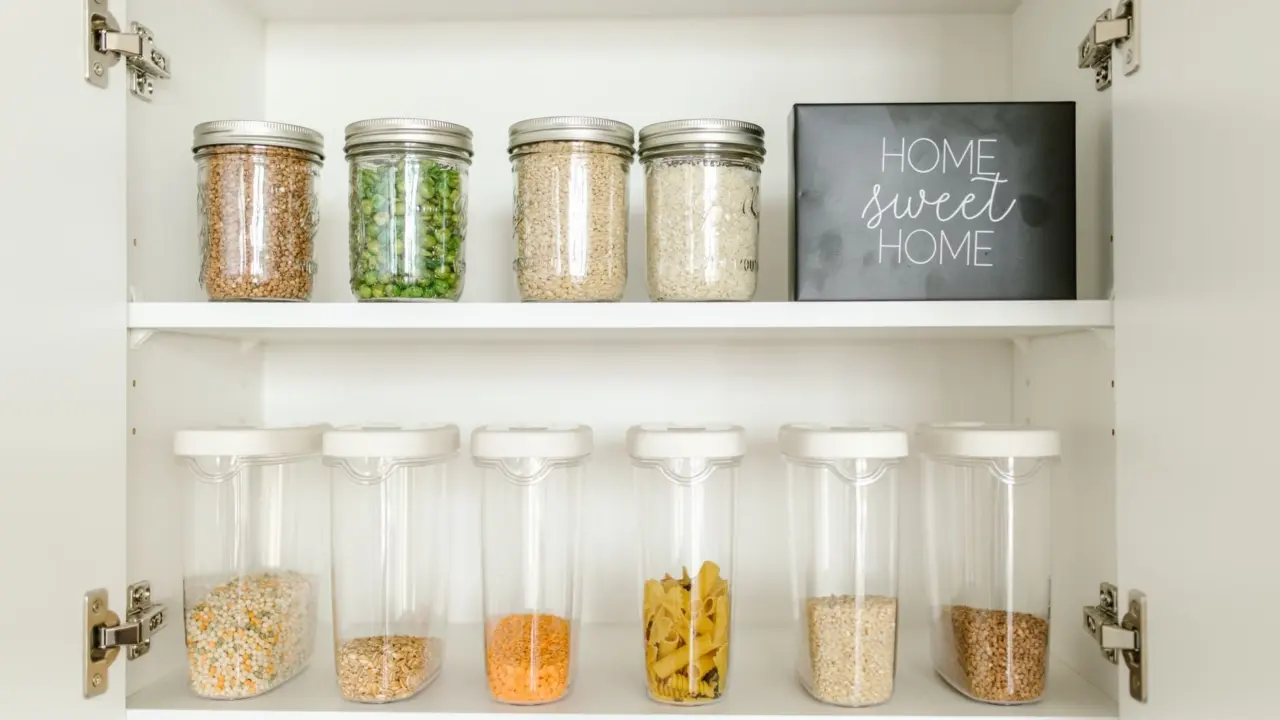
Airtight containers are the main tool for keeping dry staples in good condition, and clear ones also keep you from overbuying. Grid and Glam says the right decanting products will prolong the shelf life of dry goods, though it gives no duration, so treat it as a benefit rather than a promise. Kath Eats adds that decanting dry goods into clear, airtight containers saves space and lets you see exactly what you have.
Flour is the staple most worth decanting early. Advice in Today’s pantry-freshness feature is to transfer flour to an airtight container when you get home from the shop. Decanting it as part of unpacking groceries is easier than deciding later which bag to deal with.
Clear containers also affect what you buy. IKEA points out that they show exactly how much you have, so you can plan your grocery runs better. A cook who can see that the oats are nearly gone avoids both the emergency shop and the duplicate purchase.
When choosing sizes, work from what you actually decant. Staples you keep on hand, such as granola, nuts, oats, flour and snacks, are the natural candidates in Kath Eats’ small pantry. Pick containers for the pantry’s measured shelf space rather than for a uniform look, and use inserts if the shelf is taller than your tallest jar.
Labels and date tracking
Decanting removes the original package, and with it the printed date, so every container needs a label that restores that information. IKEA recommends labelling each container and taping on the expiration dates. Taste for Life makes the same point from the other direction: mark the item’s name and expiration date, and place the label where it can easily be spotted.
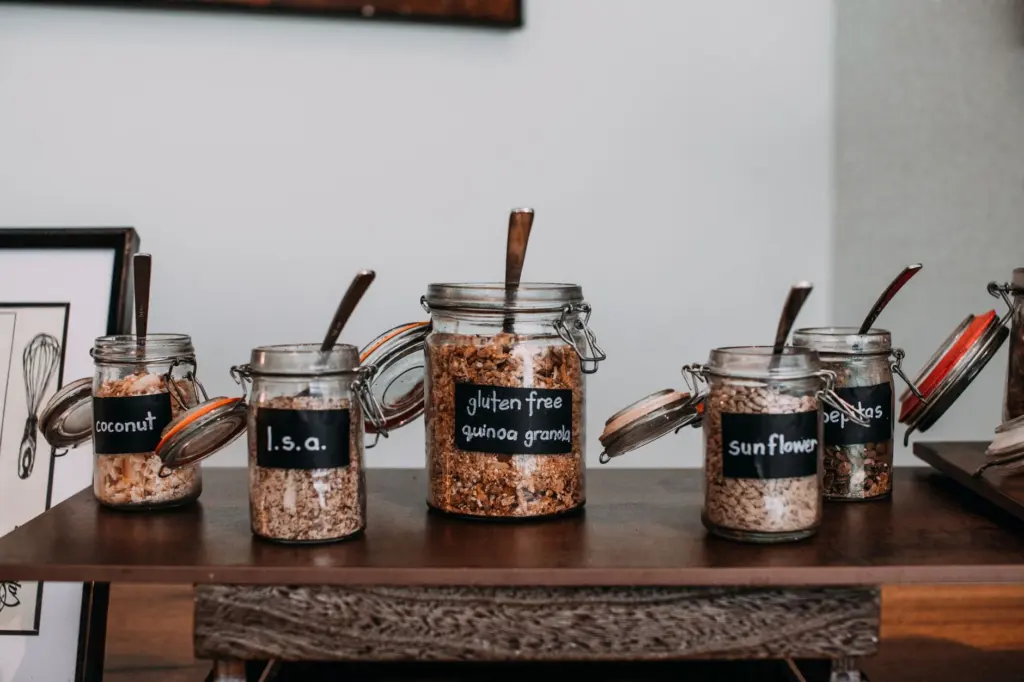
A name-only label is better than none, but it solves half the problem. If two similar white powders share a shelf, the name prevents a mix-up, while the date tells you whether to use it this week. Aim for both on every decanted container, and put the label on the face that points outward.
How long pantry staples last
No single shelf-life number covers every pantry staple, so the practical approach is to track the printed date and your own opening date. Canned goods are the reassuring case. Taste for Life notes that they last a long time when stored properly. That is a reason to keep them visible and in rotation rather than to leave them for years.
For decanted dry goods, the date you transfer them and the date on the package are your reference points. For leaveners, the open date is the one to record, which the FAQ below explains. If a container has no label, treat it as a candidate for the next purge.
- Canned goods: durable when stored properly, but still the most commonly discarded category, so check them during each purge.
- Decanted dry goods: airtight storage is described as prolonging shelf life, so rely on the label rather than memory.
- Unlabelled items: if you cannot say when something was bought, it is the first to go.
Upkeep that keeps the system working
Kath Eats suggests a monthly quick expiration check, with anything that is not going to be used donated or tossed. A monthly check is frequent enough to catch drift in the zones without turning into another chore. Use the occasion to push the oldest containers forward, refill what is low, and make sure each label is still readable.
Keeping the cooking-led logic intact matters more than perfect looks. If a zone keeps overflowing, you are buying more of that category than you cook with, so adjust the shopping rather than the shelf. After a big cleanout, a lunch of leftovers can be a good reward, and How to Reheat Pizza: 7 Easy Ways To Get Crispy, Melty Slices Today – Asmallbite covers how to do that well.
Frequently asked questions
Which container shape saves the most space?
Rectangular containers. Taste for Life notes that they stack more easily and take up less space than round ones.
Can I label with painter’s tape?
Yes. Taste for Life suggests a permanent marker on painter’s tape, with the item’s name and expiration date, placed where it is easy to spot.
Should I date baking powder and baking soda?
Yes. Today’s pantry advice is to write the date you open baking powder and baking soda on the packages, so you know how long they have been in use.
How do I stop tall bottles tipping over?
Use baskets. IKEA recommends them to keep tall bottles like oils and sauces together, which also keeps the pantry shelf protected from spills.