| Variable | Supported effect | Planning use |
|---|---|---|
| Butter temperature | Too cold and it will not mix well; too melted and the cookies spread too much | Soften the butter before mixing and never melt it |
| Quick chill of 15-20 minutes | Helps cookies hold their shape and prevents too much spreading | Use it when the oven is preheating to 350°F (177°C) and you want cut-outs without a long wait |
| Chill of at least 1 hour | Gives a chewier cookie | Choose it when you can plan ahead and want chew over speed |
| Mixing | Mixing just until combined keeps the cookies soft | Stop as soon as the flour disappears into the dough |
| Bake time of 12 minutes, or 10-12 minutes in a single-serve version | Edges turn lightly browned, or golden and set | Judge doneness by the edges, not the clock alone |
Figures come from A Red Spatula’s small-batch soft sugar cookies and Kathleen’s Cravings single-serve sugar cookie.
This small batch sugar cookie recipe, adapted from A Red Spatula’s version, makes 6 smaller cookies or 4 larger ones from 1 cup of all-purpose flour. Chill the dough first so cookies hold their shape.
The batch is sized for a single small tray, so you get soft cut-out cookies without a freezer full of leftovers. If you are planning the rest of the meal, our easy weeknight dinner recipes pair well with a small dessert.
Chill time: matching the wait to the cookie
The length of the chill is the biggest practical decision in this recipe, because it changes both shape and texture. Three different chill times appear in small-batch sugar cookie recipes, and each suits a different situation.
- Quick chill, 15-20 minutes. Kathleen’s Cravings puts the dough in the fridge while the oven finishes preheating. That short chill helps the cookies hold their shape and prevents too much spreading. This is the right choice for a weeknight bake.
- Long chill, at least 1 hour. A Red Spatula advises this if you want a chewy cookie. Choose it when chew matters more than speed, or when you can mix the dough earlier in the day.
- Rescue chill, about a half hour. The Weal Meal suggests this when the dough is too sticky to roll into balls. Treat it as a fix for sticky dough in a drop-style recipe, not a required step.
For cut-out cookies, do not skip the chill entirely. A small bowl of dough warms quickly in your hands and on the counter, so the quick chill is the minimum and the long chill is the upgrade.
Why cookies spread
Cookies spread when the fat in the dough is too warm by the time the cookie meets the oven heat. Two supported causes are worth checking before you blame the recipe.
Butter that is too soft or melted
A Red Spatula is specific about the state of the butter: it should be softened, because butter that is too cold will not mix well, and butter that is too melted makes the cookies spread too much. If your kitchen is warm and the butter has gone glossy, put it back in the fridge for a short while before creaming it with the sugar.
Dough that skipped the chill
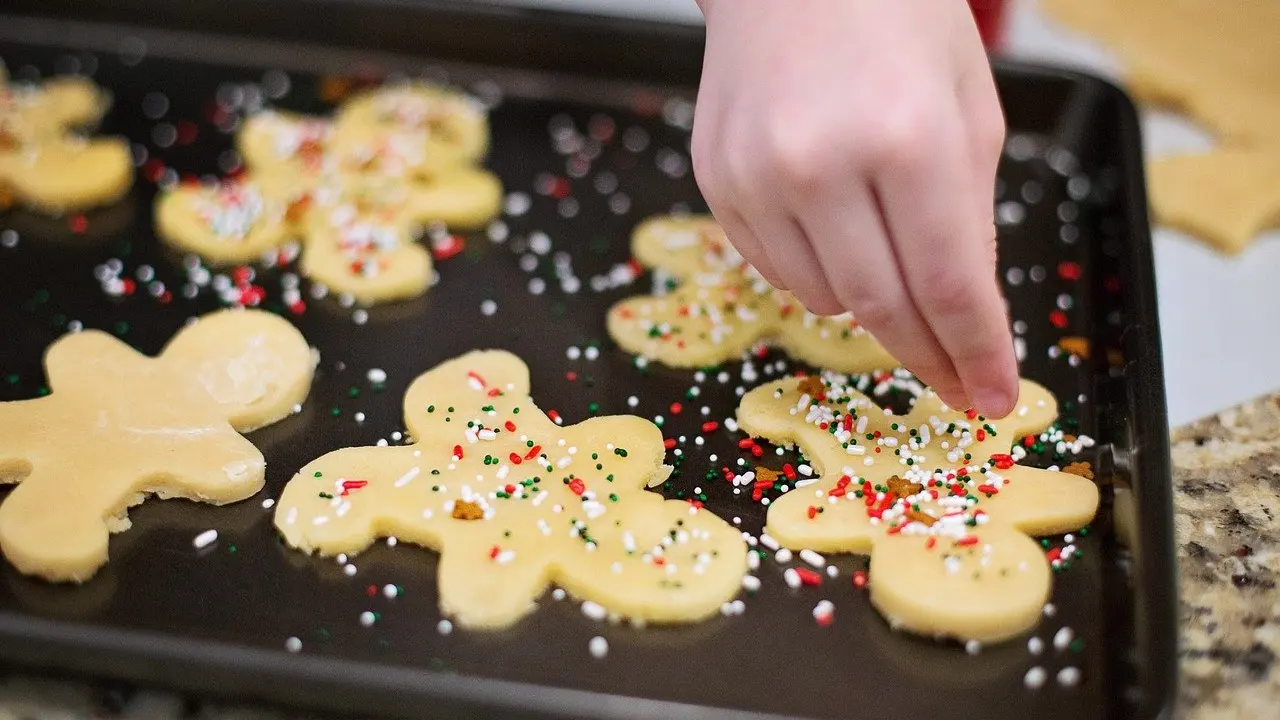
Kathleen’s Cravings explains that a quick chill helps the cookies hold their shape and prevents too much spreading. That is why cut shapes from chilled dough keep their outline better than shapes cut from warm dough. If your cutters are intricate, lean toward the longer chill.
Ingredients for a single small tray
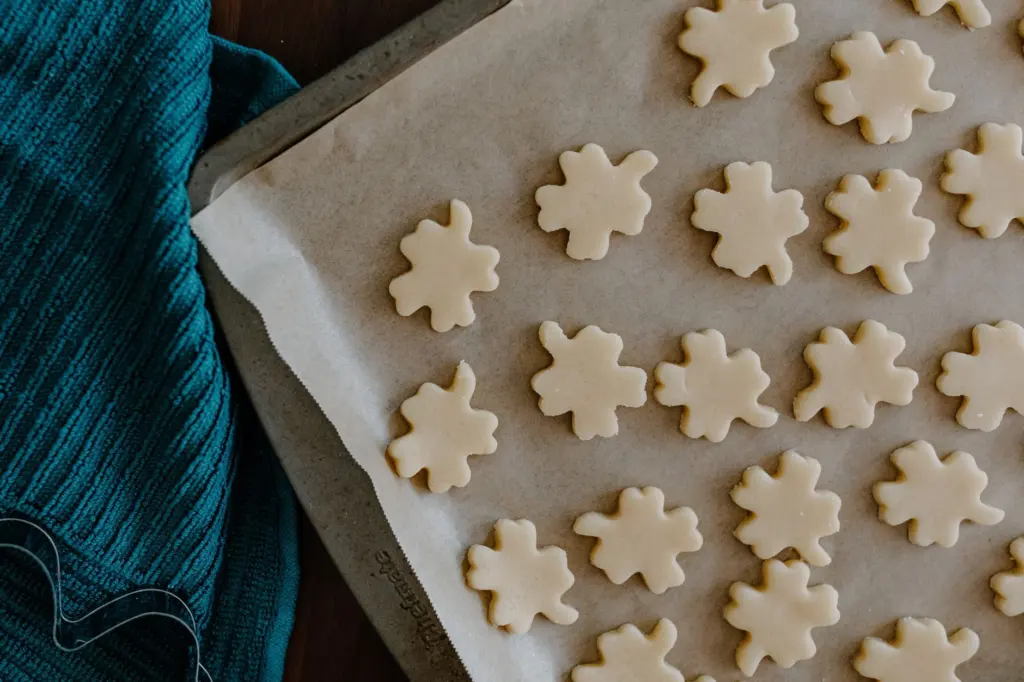
These quantities come from A Red Spatula’s recipe card. They fill a single baking sheet with 6 smaller cookies, or 4 larger ones if you cut generous shapes.
- Butter: 3 tablespoons, softened. It should be soft enough to mix but not greasy.
- Granulated sugar: 5 tablespoons.
- Egg yolk: 1. Using only the yolk avoids splitting an egg for such a small amount of dough.
- Milk: 2 tablespoons.
- All-purpose flour: 1 cup.
- Baking powder: 1/2 teaspoon.
- Salt: a dash.
If you prefer to weigh, Kathleen’s Cravings lists its single-serve butter as 2 tablespoons (28 g) and its all-purpose flour as 1/3 cup (43 g), measured with the spoon-and-level method. Spooning flour into the cup and levelling it, instead of scooping, is the simplest way to avoid packing too much into a recipe this small.
A larger recipe is not a shortcut here. A big-batch sugar cookie recipe makes about 4 dozen cookies, so a small tray calls for its own sized-down dough. Need more cookies than this base gives? Mix the base again instead of stretching a single bowl.
Mixing, rolling and cutting
Mix gently and in order, because overmixing is the easiest way to lose the soft texture. A Red Spatula’s advice is to mix just until combined to keep the cookies soft.
- Preheat the oven to 350°F (177°C) and line a baking sheet.
- Mix the butter and sugar until blended, then add the egg yolk and milk.
- Add the flour, baking powder and salt and stir only until the dough comes together.
- Chill the dough for the time that suits your plan, as described above.
- Roll and cut the chilled dough, then move the shapes to the prepared sheet.
Work quickly once the dough is out of the fridge. If the scraps soften, return them to the fridge briefly before you re-roll, since warm dough behaves like warm butter and spreads more.

Bake cues and cooling
Bake by the edges, not only by the timer. A Red Spatula bakes these cookies for 12 minutes or until the edges are lightly browned, while the single-serve version bakes for 10-12 minutes until the edges are golden and set. Check at the early end of that range if your cookies are small or thin.
The same single-serve recipe lets the cookies cool on the baking sheet for 10 minutes before they are moved. That rest gives the cookies time to firm up so they are easier to lift.
Choosing a small-batch version
Three tested small-batch recipes differ enough that your pantry may decide which one to use.
- Standard six-cookie base. A Red Spatula uses butter, sugar, an egg yolk, milk, flour and baking powder, and suits most kitchens.
- Single-serve. Kathleen’s Cravings uses 2 tablespoons (28 g) of unsalted butter and 1/3 cup (43 g) of flour, and suits a cook baking for one.
- Six cookies with baking soda. The Weal Meal uses 4 tablespoons of salted butter, 1 large egg yolk, 1/3 cup and 2 tablespoons of sugar (divided), 1/2 cup and 2 tablespoons of flour and 1/4 teaspoon of baking soda, and bakes for 10 minutes until cracks form on top. It is a drop-style cookie, so it will not give you clean cut-outs.
Do not carry a time from a large recipe over to a small tray. The big-batch recipe bakes at 375°F for 9 to 10 minutes, whereas the small-batch recipes above use 350°F, so follow the temperature and cues that belong to the dough you are making.
More to bake and cook
If you enjoy small-batch baking, the Perfect Small-Batch Cinnamon Rolls: Fluffy 8-Roll Recipe For Weekend Mornings – Asmallbite guide scales a weekend bake to a single pan. For a savoury dinner before the cookies, One‑Pan Chicken Orzo: Creamy, Quick Dinner You Can Make in 30 Minutes – Asmallbite keeps the washing-up low.
Frequently asked questions
How many cookies does this recipe make?
It makes 6 smaller cookies or 4 larger ones, according to A Red Spatula. The Weal Meal’s version also yields six cookies.
Can I make just one portion of sugar cookie dough?
Yes. Kathleen’s Cravings has a single-serve recipe with 2 tablespoons (28 g) of unsalted butter and 1/3 cup (43 g) of all-purpose flour.
Should I use salted or unsalted butter?
Both appear in small-batch recipes. The single-serve version uses unsalted butter, while The Weal Meal uses salted butter. Either way, the butter should be softened, not melted.