A homemade spaghetti sauce recipe with fresh tomatoes needs ripe tomatoes, ideally a mix of Roma and vine-ripened, and a slow simmer of 45 minutes. Peeling is optional, according to one tested recipe.
It suits the pasta nights collected in our easy weeknight dinner recipes, because the sauce needs little hands-on prep and keeps well in the fridge or freezer.
Choosing tomatoes for spaghetti sauce
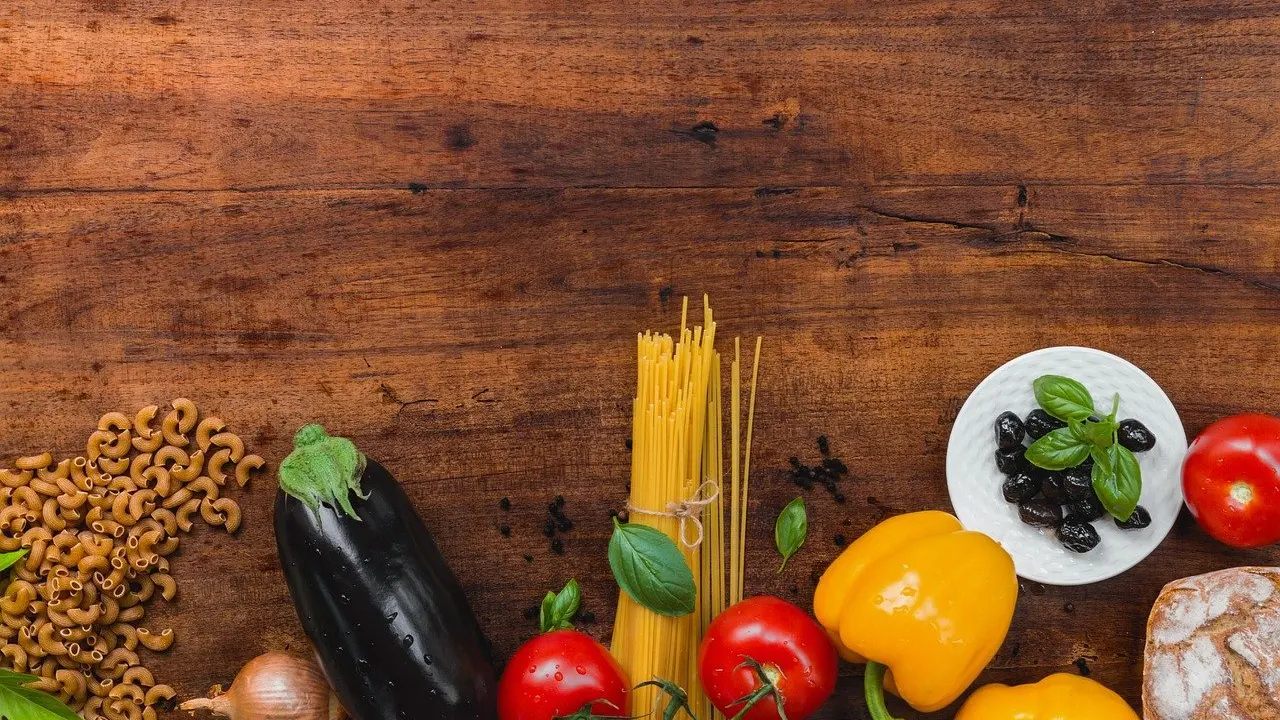
The best tomatoes for spaghetti sauce are ripe ones, and a mix of two types beats a single type. The tested recipe at Weekday Pescatarian uses 3 pounds of mixed tomatoes: 6-8 Romas plus 3-4 vine-ripened. The split has a purpose. Romas provide body and fewer seeds, while vine-ripened tomatoes add bright, sweet flavor.
Ripeness matters as much as variety. Cookie and Kate puts it bluntly: you want ripe, almost over-ripe tomatoes. If you can only find one type, choose Romas for a thicker sauce or vine-ripened for a sweeter one. Buy by ripeness first and by variety second.
| Tomato type | What it gives the sauce | Planning use |
|---|---|---|
| Roma | Body and fewer seeds; 6-8 in a 3-pound mix | Use as the base when you want a thicker, less seedy sauce. |
| Vine-ripened | Bright, sweet flavor; 3-4 in a 3-pound mix | Add alongside Romas to lift flavor without losing body. |
| Cherry | Seedy; skins and seeds stay visible when the sauce is not strained | Choose when you want a quick sauce and do not mind a rustic look. |
Figures and roles come from the Roma and vine-ripened recipe and from Carrots & Cookies on cherry tomato sauce.
Peeling fresh tomatoes
You can peel fresh tomatoes several ways, and for a rustic sauce you can skip peeling altogether. Which route to take depends on how smooth you want the result and how many tomatoes you are processing.
Skipping the peel
The Weekday Pescatarian author reports testing peeling, blanching and a food mill, then concluding that you don’t have to peel your tomatoes. An immersion blender gives the sauce a rustic texture. Cherry tomatoes make the same point from the other side: because they are seedy, the skins and seeds stay visible when the sauce is not strained, so expect a more textured result.
Peeler or grater
If you prefer skinless tomatoes, the same recipe suggests a vegetable peeler on large tomatoes. A grater works too. Cookie and Kate rubs the cut sides of the tomatoes against the large holes of a box grater, leaves the pulp in the bowl and discards the skin. This removes the skin without a pot of boiling water, so it suits a few tomatoes better than a whole harvest.
Blanching
Blanching, the dip-and-peel method, is the traditional route, and it is one of the methods the tested recipe compared before calling peeling optional. Choose it when you want skinless sauce from a large batch. A recipe from Carrots & Cookies draws a clear line: peel tomatoes other than cherry or grape before making the sauce.
Simmering the sauce
Simmering turns chopped tomatoes into sauce. The tested method is slow and low-effort: prep takes 15 minutes, then the pot does most of the work. The steps below follow that recipe.
- Prepare the tomatoes and garlic. Peel or leave the skins on 3 pounds of mixed tomatoes, and slice 6 large garlic cloves.
- Start with the fat. The recipe uses 5 tablespoons of salted butter in place of the usual olive oil, because butter adds richness.
- Add garlic, then tomatoes. Bring the pot to a gentle simmer.
- Simmer slowly for 45 minutes. Stir occasionally and break up the tomatoes with a spoon as they soften.
- Blend if you like. An immersion blender gives a rustic texture; leave it unblended for a chunkier sauce.
- Finish with basil. Stir in 1/4 cup fresh basil leaves, which the recipe lists as optional.
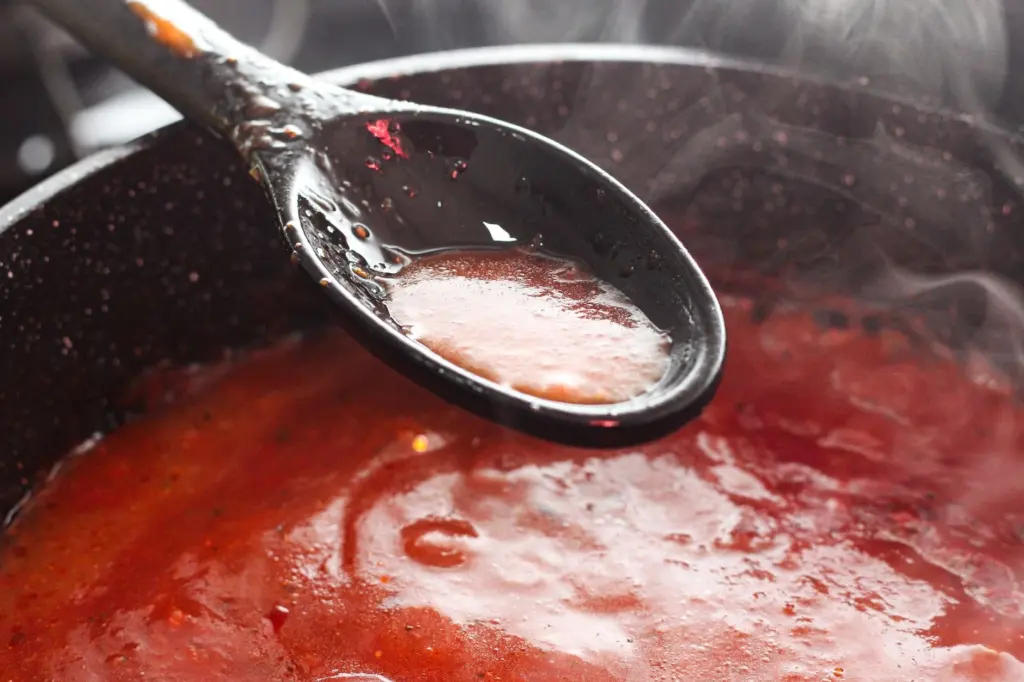
Use the spoon as your check while the pot bubbles. When the sauce clings and the surface turns glossy, the tomatoes have broken down.
Acidity, garlic and seasoning
To reduce acidity in tomato sauce, start with the fruit rather than the pot. Ripe, almost over-ripe tomatoes carry the most natural sweetness, and vine-ripened tomatoes add sweet flavor to a Roma base. Fat also rounds the sauce. The tested recipe’s butter adds richness, and in a cherry tomato sauce extra virgin olive oil helps thicken the sauce a little. Taste at the end of the simmer. If the sauce still seems sharp, treat that as a cue to choose riper tomatoes next time rather than masking it.
Garlic is the other lever, and the amount depends on whether the sauce is cooked. The simmered sauce uses 6 large garlic cloves, sliced, while Cookie and Kate’s uncooked sauce uses only 1 very small garlic clove (or 1/2 medium clove). Match the garlic to the method rather than carrying one quantity across both.
Serving and variations
Fresh basil is the natural finish, and the basil in the tested recipe is optional, so add it to taste. For pasta night, cook the spaghetti separately and toss it with the sauce. In Cookie and Kate’s uncooked version, 1 1/2 lb ripe tomatoes are grated and left to marinate for 10 minutes. The pasta and sauce then cook together over medium-low heat for about 1 to 2 minutes, tossing often.
That raw-tomato method is the choice when summer fruit is at its peak and you want dinner quickly. The slow-simmered pot suits a larger batch and a deeper flavor.
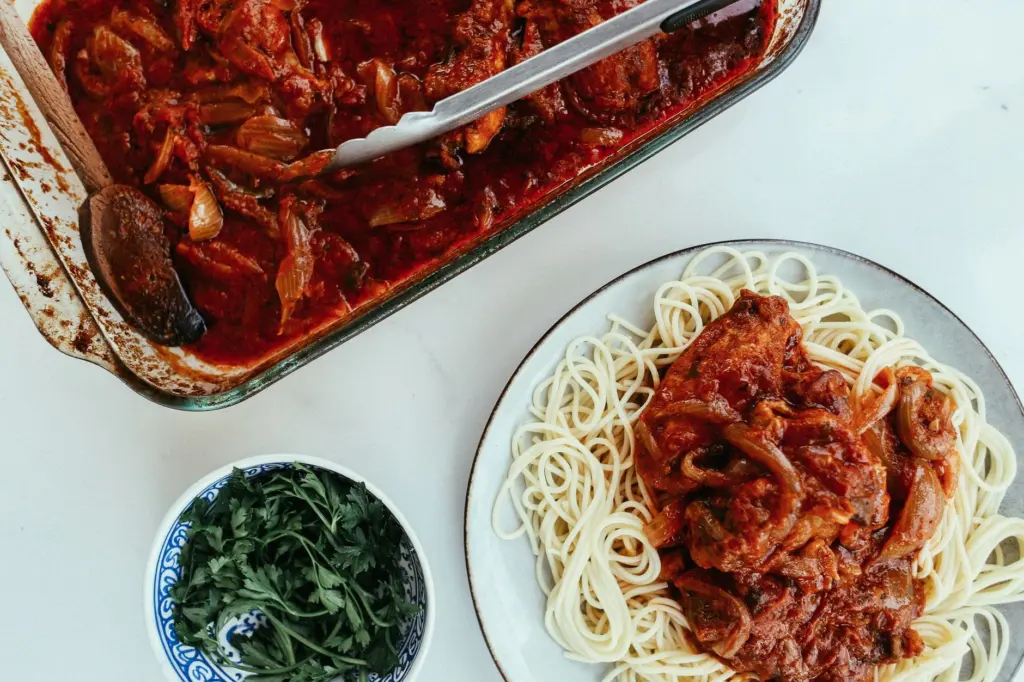
The same fresh-sauce thinking carries over to other dishes. Our The Best Homemade Taco Sauce Recipe: Quick, Tangy, and Customizable In 15 Minutes – Asmallbite shows how a quick tomato-based sauce changes with its seasoning. For a meat dinner beside it, How To Season Carne Asada: A Simple 5-Step Marinade For Juicy, Authentic Flavor – Asmallbite covers the marinade.
Storing and freezing the sauce
Fresh tomato sauce keeps up to 3 days in the refrigerator, according to the tested recipe, which says to freeze it for longer storage. A meat-based spaghetti sauce is given a longer fridge window, 3-5 days in an airtight container, so do not assume that window applies to a meatless fresh-tomato sauce.
Homemade spaghetti sauce freezes well, so freezing is the practical choice for a big summer batch. Date the container so you can use the oldest first. To thaw, leave frozen fresh tomato sauce in the refrigerator overnight or defrost it in the microwave, then reheat before serving.
Frequently asked questions
Can I make this sauce with cherry tomatoes?
Yes. In the Carrots & Cookies recipe, 3 cups of cherry tomatoes make about 2 cups of sauce, with a total cook time of 20 minutes.
How far ahead can cherry tomato sauce be made?
It can be made up to 2 days ahead and stored refrigerated in an airtight container for up to 2 days.
Can I use olive oil instead of butter?
Yes. The butter version is a deliberate departure, since most recipes rely on olive oil. Cookie and Kate’s fresh tomato pasta uses 2 tablespoons of olive oil.
Is basil required?
No. The tested recipe lists 1/4 cup fresh basil leaves as optional, so add it for aroma if you have it.