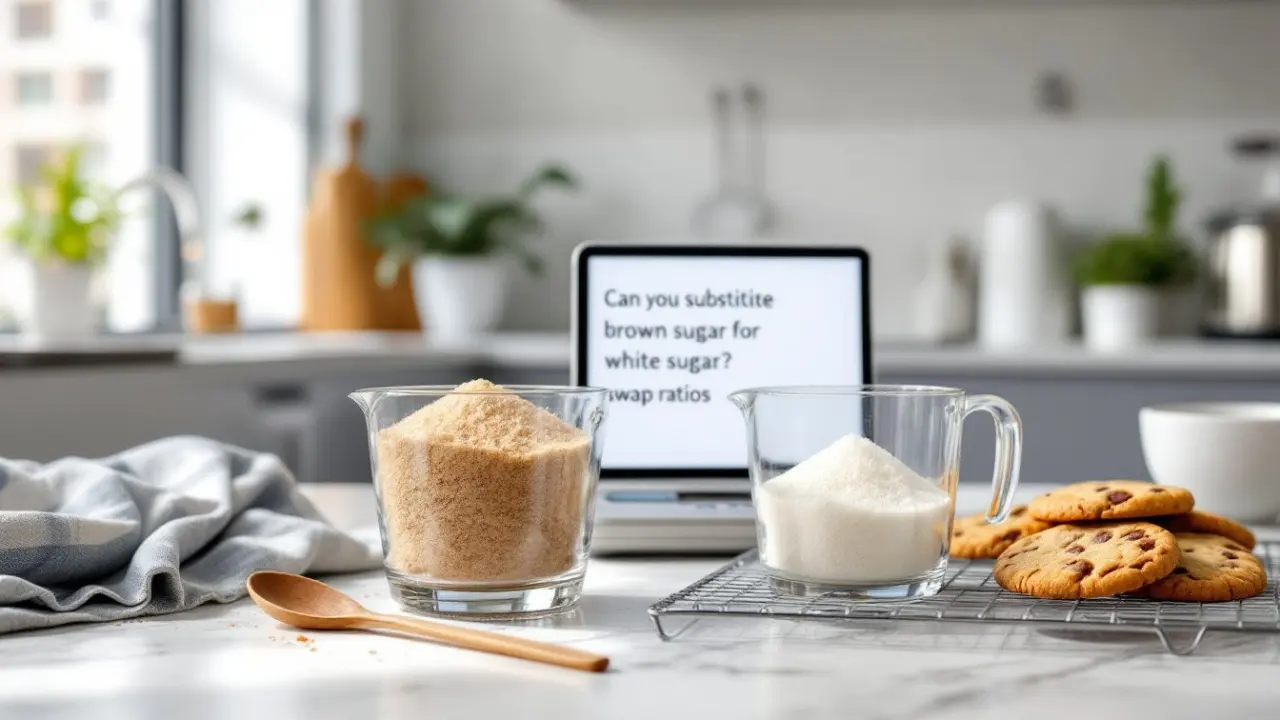
Can you substitute brown sugar for white sugar in a recipe? The question appears often. This article answers that question with clear rules, reasons, and quick tips. It explains how brown sugar changes texture, flavor, and moisture. It lists when the swap works and when it will fail. It gives practical ratios and simple fixes for common problems.
Key Takeaways
- You can substitute brown sugar for white sugar in many recipes, but the results depend on the recipe and desired texture and flavor.
- Brown sugar adds moisture, chewiness, and a mild molasses flavor, making it ideal for cookies, brownies, quick breads, and sauces.
- Avoid substituting brown sugar in recipes requiring crisp texture, pale color, or precise sugar crystallization like meringues, angel food cake, and candies.
- Use a 1:1 volume ratio when swapping brown sugar for white sugar, but adjust other liquids and baking agents to balance moisture and acidity.
- Chill dough longer and bake slightly longer for crispier cookies, or reduce oven temperature for softer cakes when using brown sugar.
- Store brown sugar in an airtight container and soften hardened sugar with a damp paper towel in a sealed container to maintain its quality.
Short Answer: Yes — But It Depends On The Recipe And Desired Results
Yes, can you substitute brown sugar for white sugar in many recipes. Bakers use brown sugar for moisture and a deeper taste. Cooks use white sugar for neutral sweetness and crisp texture. The choice changes the final dish. They must consider texture, color, and flavor. If a recipe relies on caramel color, lift, or crisp edges, white sugar often works better. If a recipe benefits from chewiness, humidity retention, or mild molasses flavor, brown sugar works well. They should test small batches when they must swap.
How Brown Sugar Differs From White Sugar And Why It Matters
Brown sugar and white sugar come from the same plant. They differ by molasses content and moisture. Those differences change baking chemistry and final texture. The next two subsections explain the main functional effects.
When Substituting Brown For White Works Well
The swap works well in cookies, brownies, quick breads, and marinades. Brown sugar keeps cookies moist and chewy. It deepens brownies and adds shine to glazes. It enhances spice blends in cakes and muffins. It blends well with brown butter and cinnamon. It works in sauces that accept darker color and deeper flavor. It works when a recipe calls for a moist crumb or soft center. Home cooks often use the swap for practical reasons like pantry limits or flavor preference. They still test timing and temperature after a swap.
When You Shouldn’t Substitute Brown For White
The swap fails in meringues, angel food cake, and some candies. Those recipes need precise sugar crystals and low moisture. Brown sugar can collapse foam and prevent stiff peaks. Brown sugar can stop sugar from reaching necessary temperatures for hard candy and brittle. White sugar remains essential for clear syrups and simple glazes for delicate pastries. Pastry chefs avoid brown sugar in recipes that require pale color or crystalline sugar structure. They also avoid the swap when the recipe relies on neutral sweetness only.
Practical Swap Ratios, Baking Adjustments, And Troubleshooting Tips
For a straight swap, use 1:1 brown sugar for white sugar by volume. They should pack brown sugar lightly when they measure. Light brown sugar yields milder molasses flavor. Dark brown sugar yields stronger flavor and more moisture. To reduce moisture, they lower other liquids by 1 to 2 tablespoons per cup of brown sugar. To balance acidity, they reduce baking soda slightly or add a pinch of baking powder. For crisper cookies, they chill dough longer and bake a few minutes longer. For softer cakes, they reduce oven temperature by 10°F and test earlier. If batter gets too dark, they cut brown sugar by 25% and add white sugar to adjust color. If a candy fails to set, they replace brown sugar with white sugar or use a tested candy recipe. They store brown sugar in an airtight container and re-soften hardened brown sugar with a damp paper towel for 20 minutes in a sealed container.