| Decision point | Supported value | Planning use |
|---|---|---|
| Oven warm-up target | 110°F internal; roughly 30 minutes for 1½-inch-thick steaks, with timing varying by thickness | Start checking early on thinner steaks, since timing varies with thickness. |
| Finishing sear | 1 tablespoon vegetable oil in a 12-inch skillet, high heat until smoking; 60 to 90 seconds per side | Keep the sear short, because it restores the crust and is not the main heating step. |
| Centre after resting | 125–130°F after a 5-minute rest, checked with an instant-read thermometer | Use this as the medium-rare finish line, not the oven temperature. |
| Danger zone | 41°F to 135°F | Do not leave steak sitting in this range while you prepare the rest of the meal. |
| Food-code benchmark | At least 165°F internal within two hours for cooked, cooled and reheated food held hot | This is far above a medium-rare finish, so decide which standard you are cooking to. |
Figures come from America’s Test Kitchen’s reheating guide and a Union County food-safety bulletin.
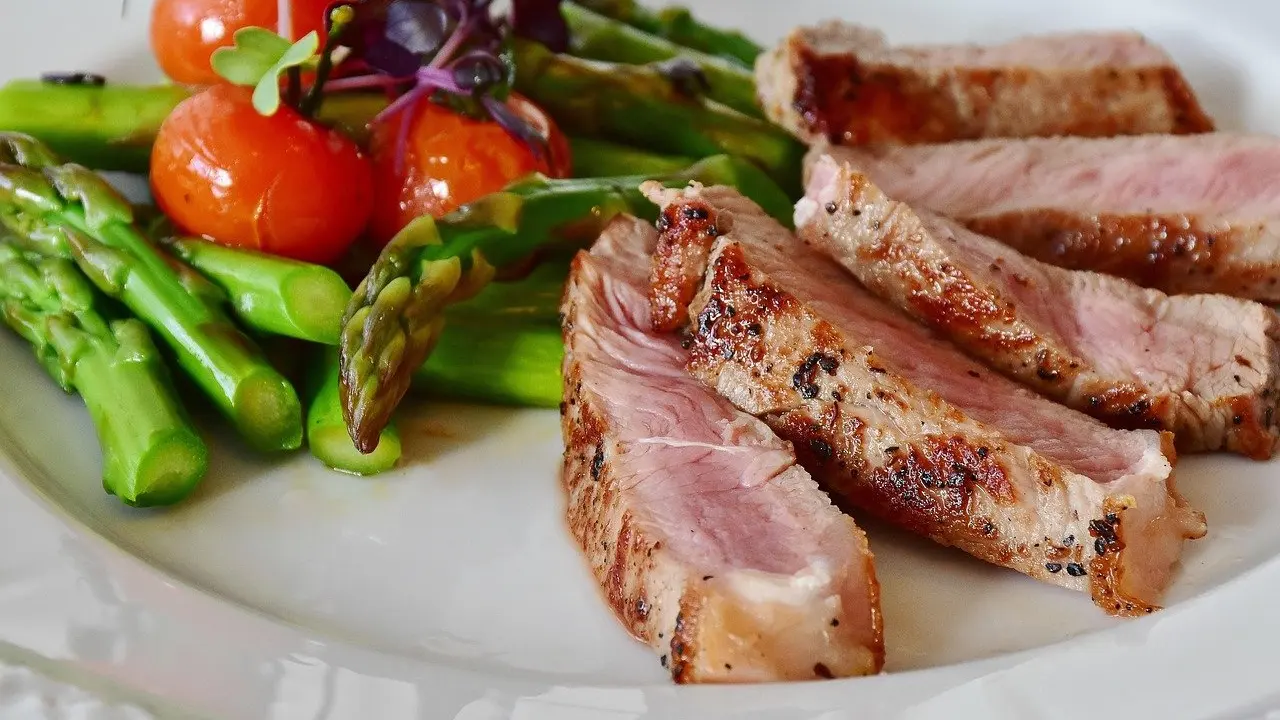
Here is how to reheat a steak so it stays juicy: warm it in the oven until it reads 110°F inside, then sear each side briefly in a hot skillet, as America’s Test Kitchen recommends.
If you are building a repertoire of reliable fixes for leftovers, our kitchen tips for beginners collect the basics in one place.
What reheating does to a steak
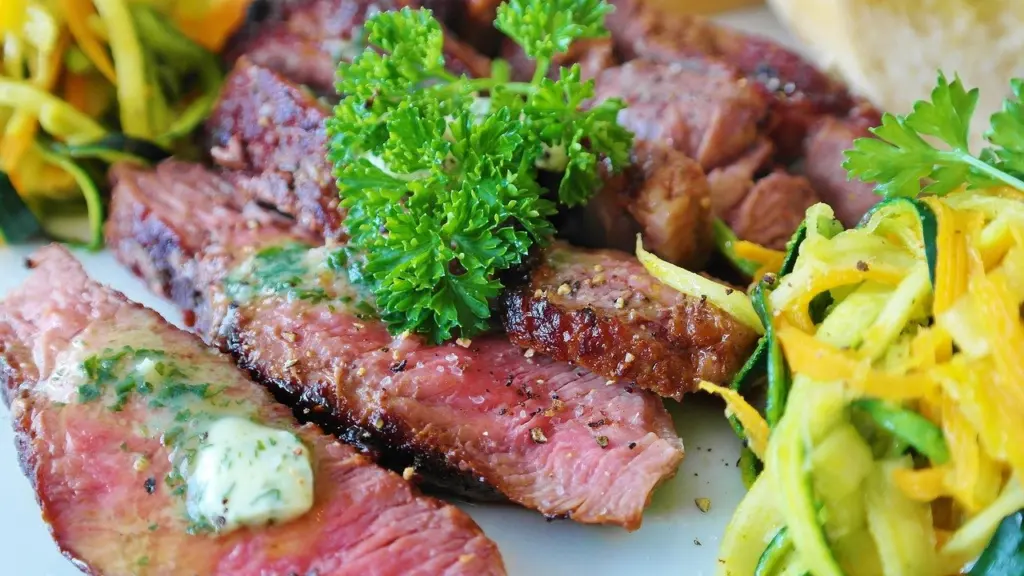
Reheating costs very little when it is done in stages. America’s Test Kitchen reports that steaks reheated with its oven-and-sear method were only slightly less juicy than freshly cooked ones, and their crusts were actually more crisp. That sets a realistic expectation. You give up a small amount of juiciness and gain a firmer, crunchier crust than the cold leftover had.
Several practical decisions follow from that result:
- Thick steaks need patience. The warm-up takes roughly 30 minutes for steaks 1½ inches thick, and the time varies with thickness. A thinner steak reaches 110°F sooner, so begin checking earlier rather than trusting a fixed timer.
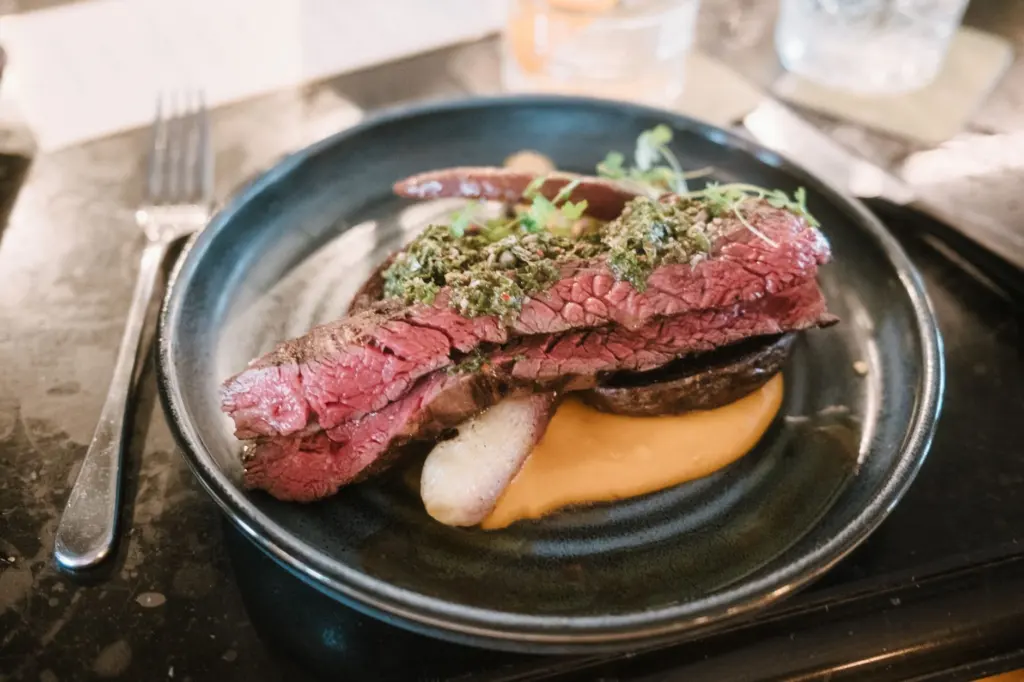
- The target is medium-rare. The method is built to bring the centre back to 125–130°F after a short rest. It suits steaks you want back near that doneness and gives you no reason to push the heat higher.
- The crust is the reward for the sear. Because the crust ends up crisper than the cold steak’s, a quick hot sear is worth the extra pan to wash.
Safety limits that shape the method
Leftover steak is a cooked, cooled food, so temperature control matters as much as texture. The Union County bulletin defines the temperature danger zone as 41°F to 135°F. The practical lesson is to avoid leaving steak out on the counter while you wait for the pan or oven to heat.
The same bulletin says cooked, cooled and reheated food for hot holding must reach an internal temperature of at least 165°F within two hours. It also advises reheating rapidly and periodically stirring or rotating food so the heat is even. A medium-rare finish of 125–130°F falls well below the 165°F benchmark, which means you are choosing between two standards:
- Cooking for texture: follow the oven-and-sear method and accept that the steak finishes at a medium-rare temperature.
- Cooking to the food-code benchmark: keep heating until the thermometer reads 165°F. Expect a much more done steak than the one you started with.
Oven warm-up and skillet sear, step by step
The method works for any cut. Ribeye, filet mignon and skirt steak are all named in America’s Test Kitchen’s instructions. The sequence matters more than the cut.
- Set the oven low and put the steak in. Place it on a sheet pan and slide an instant-read thermometer into the thickest part.
- Warm it to 110°F. Allow roughly 30 minutes for a 1½-inch-thick steak, and less for a thinner one.
- Heat the skillet while the steak finishes. Add 1 tablespoon of vegetable oil to a 12-inch skillet and heat it on high until it smokes.
- Sear both sides. Give the steak 60 to 90 seconds per side, until the crust is crisp.
- Rest it for 5 minutes. Then check the centre again, which should read 125–130°F.
Once the oven has been used for a while, grease can bake on. Our guide to How To Clean An Oven With Baking Soda And Vinegar: A Simple DIY Method For Sparkling Results (2026) – Asmallbite covers a simple way to deal with it.
Why the oven-then-sear order works
The two stages do different jobs. The oven stage lifts the whole steak to 110°F, a figure well below the finished doneness. It also leaves room for the pan and the rest to add the remaining heat. The sear is deliberately brief at 60 to 90 seconds per side, and the centre finishes at 125–130°F after the 5-minute rest.
That is why the oven stage stops where it does. If you warm the steak further in the oven, the sear and rest take it beyond the medium-rare range the method aims for. Reversing the order would also give up the crisp crust, because the crust forms in the final high-heat step and would have no chance to stay crisp if it were followed by a long warm-up.
Mistakes that dry out or overcook leftovers
- Going by the clock alone. The 30-minute estimate applies to 1½-inch-thick steaks. Steaks of other thicknesses reach 110°F at other times, so the thermometer should decide when to move on.
- Warming past the target. Heating well beyond 110°F in the oven leaves little margin before the sear and rest push the centre past medium-rare.
- Searing in a pan that is not hot enough. The method calls for oil heated until it smokes. A cooler pan needs more time on each side, which works against the short 60 to 90 seconds that protects the interior.
- Skipping the rest. The 125–130°F reading is taken after the 5-minute rest, not straight out of the pan.
If you are reheating other leftovers on the same day, How to Reheat Pizza: 7 Easy Ways To Get Crispy, Melty Slices Today – Asmallbite covers a food with its own methods.
Frequently asked questions
How long is leftover steak safe?
Keep it out of the 41°F to 135°F danger zone. The Union County bulletin advises heating only the amount needed for immediate consumption and discarding any reheated leftovers rather than heating them again.
Does this method work for every cut?
Yes. America’s Test Kitchen says the approach works for ribeye, filet mignon and skirt steak. Thickness changes the oven time more than the cut does.
Do I need a meat thermometer?
It is the most reliable tool for this method. The roughly 30-minute estimate applies only to 1½-inch-thick steaks, so an instant-read thermometer is what confirms the 110°F warm-up point and the final 125–130°F reading.